
FOOD & DRINK — MEXICO
Mezcal vs Tequila — A Beginner's Guide for Travellers in Mexico
One of them is the most famous Mexican spirit in the world. The other is older, more complex, and nothing like what most people expect. Here is everything you need to know before you sit down at a mezcalería in Tulum.
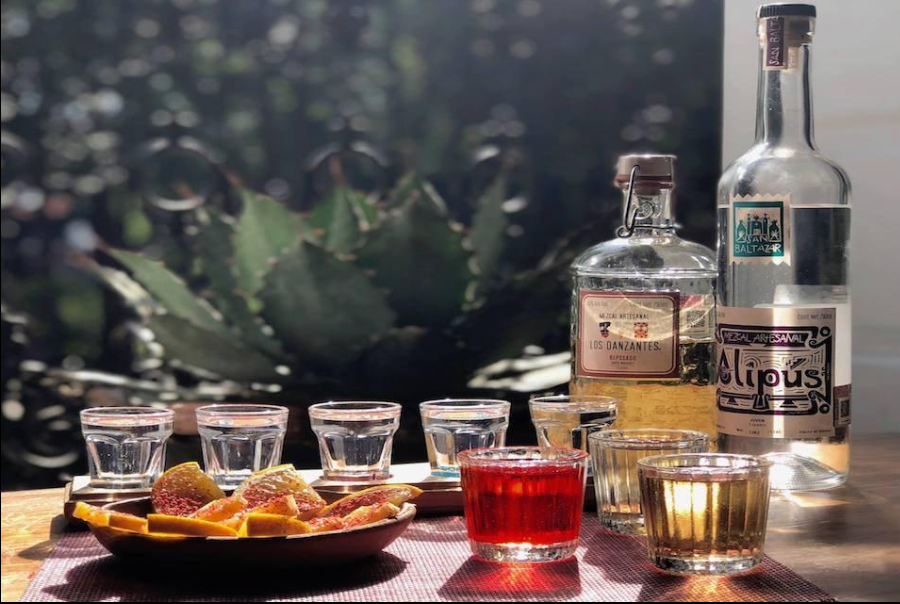
Why This Distinction Matters in Mexico
At some point during almost every trip to the Riviera Maya, a mezcal appears in front of you. Maybe at a beach bar in Holbox. Maybe at a mezcalería on the Tulum beach road with a list of 80 labels you do not know how to read. Maybe at a Playa del Carmen cocktail bar where the bartender asks if you want the espadín or the tobalá and you nod as if you know what either of those words means.
Most visitors to Mexico have a working knowledge of tequila — they have drunk it in margaritas, done shots of it at some point in their life, and formed an opinion about it that is probably based on a mid-shelf bottle consumed at speed. Mezcal is different in every way that matters: how it is made, what it tastes like, how it is drunk, and what it means culturally in Mexico. Understanding the difference does not require becoming a spirits enthusiast. It requires about ten minutes of reading and one good pour of the right mezcal. This guide provides the first. The mezcalería provides the second.
Mezcal vs Tequila — The Core Differences
Before the full guide — the essential facts side by side.
MEZCAL
Raw material: Any of 40+ agave varieties
Primary variety: Espadín (most common), plus tobalá, madrecuixe, tepeztate, arroqueño, and many others
Origin: Multiple Mexican states — Oaxaca, Guerrero, Durango, San Luis Potosí, Zacatecas, and others
Production: Traditional and artisanal — agave piñas roasted in earth pits, fermented in open wooden vats, distilled in clay or copper pot stills
Flavour: Smoky, complex, earthy, mineral, fruity depending on the variety — no two mezcals taste the same
Smoke: YES — from the pit-roasting of the agave. This is the defining flavour characteristic.
ABV: Typically 40–55% — often higher than tequila
Price range: $30–300+ USD per bottle — price reflects the time, labour, and agave maturity involved
Age of plant at harvest: 7–30+ years depending on variety — some agave varieties take 25 years to mature
Status: Protected Denomination of Origin — must be produced in certified regions
TEQUILA
Raw material: Blue agave (Agave tequilana Weber) only
Primary variety: One — blue agave, always
Origin: Primarily Jalisco state (around the town of Tequila) — also permitted in Guanajuato, Michoacán, Nayarit, and Tamaulipas
Production: Largely industrial for major brands — agave piñas steamed in ovens, fermented in stainless steel tanks, distilled in column stills at scale. Smaller craft producers use more traditional methods.
Flavour: Bright, vegetal, citrusy, pepper notes — cleaner and more consistent than mezcal by design
Smoke: NO — the steaming process does not produce smoke. Tequila should not taste smoky.
ABV: Typically 38–40% — regulated minimum
Price range: $15–200+ USD per bottle — wide range from mass-market to craft
Age of plant at harvest: 7–10 years for blue agave — more consistent and faster than most mezcal agave
Status: Protected Denomination of Origin — strictly regulated and the most globally recognised Mexican spirit
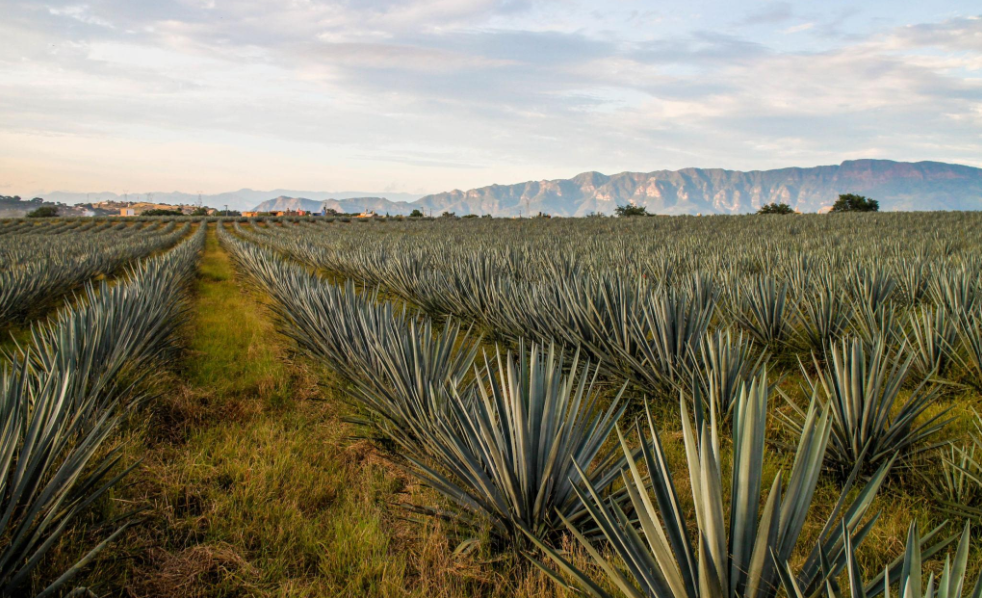
It All Starts with the Agave
Both mezcal and tequila are made from the agave plant — a succulent native to Mexico and parts of the American Southwest that has been cultivated and used by Mesoamerican peoples for over 10,000 years. The agave is not a cactus, despite looking like one. It is more closely related to asparagus. It flowers once in its life — a single spectacular bloom that can reach 10 metres in height — and then dies. The flowering is called the quiote, and the mezcal producer must cut the quiote before it fully develops to redirect the plant’s energy into the piña — the dense, starchy heart of the agave that is the raw material for the spirit.
This single fact explains most of the difference in character between mezcal and tequila: the time it takes. Blue agave — the only variety used for tequila — takes 7 to 10 years to reach maturity. Espadín agave, the most common mezcal variety, takes 8 to 12 years. Tobalá agave, one of the most prized mezcal varieties, can take 12 to 15 years. Tepeztate agave takes 25 to 35 years to mature. When you drink a glass of tepeztate mezcal, you are drinking the product of a plant that began growing before your last decade.
This is not a romantic metaphor — it is a practical economic reality that shapes the entire mezcal industry. The slow maturation of wild and semi-wild agave varieties is the reason that genuinely good mezcal is expensive, the reason that many traditional varieties are endangered by over-harvesting, and the reason that the relationship between a mezcal producer (the mezcalero) and the agave plants on their land is a multi-generational commitment rather than an agricultural cycle.
For the visitor drinking mezcal in a Tulum bar, this context changes the experience of the glass in front of them. The smoke in that mezcal is from wood fire. The complexity is from an agave plant that grew slowly in poor soil for a decade. The variability between one bottle and the next is because each batch is small, handmade, and impossible to fully standardise. None of this applies to a bottle of mid-shelf tequila, which is a product engineered for consistency, scale, and a recognisable flavour profile that does not vary.
The Production Process — Where the Difference Is Made
The flavour difference between mezcal and tequila is not accidental — it is the direct result of two fundamentally different production approaches. Understanding the process is understanding the taste.
MEZCAL — THE TRADITIONAL PROCESS
STEP 1 — HARVEST
The mature agave plant is cut from the earth by a jimador using a long-handled tool called a coa. The leaves (pencas) are stripped away to reveal the piña — the dense heart of the plant, ranging from 40kg to over 200kg depending on the variety and age. This is manual, skilled labour.
STEP 2 — ROASTING IN THE PIT (THE SOURCE OF THE SMOKE)
The piñas are placed in a conical earth pit (palenque) lined with hot volcanic rocks and covered with earth, agave fibre, and canvas for 3 to 7 days. This slow pit-roasting is what creates mezcal’s defining smoky character — the fire and the earth become part of the spirit itself. This is the step that has no equivalent in tequila production.
STEP 3 — CRUSHING
The roasted piñas are crushed to extract the juice and fibres (bagasse). Traditional mezcal uses a stone wheel (tahona) pulled by a horse or donkey. Some producers use a mechanical shredder. The crushing method affects the texture and weight of the final spirit.
STEP 4 — OPEN FERMENTATION
The crushed agave fibres and juice are placed in open wooden or stone vats with water. Wild ambient yeast (not commercial yeast) initiates fermentation over 5 to 30 days depending on weather, temperature, and the microbiological environment of the producer’s specific location. This is why mezcal from the same producer varies batch to batch — wild fermentation is not controllable.
STEP 5 — DISTILLATION IN CLAY OR COPPER
Artisanal mezcal is distilled twice in small clay pots (olla de barro) or copper pot stills. The small still size limits batch volume and means that every bottle is a product of a specific, traceable production run. The distillate typically runs at 50–55% ABV and is diluted to the desired strength with water from the same source used in fermentation.
THE RESULT: A spirit that carries the flavour of the earth, the fire, the specific agave variety, the wild fermentation environment, and the hands of the mezcalero who made it. No two batches are identical.
TEQUILA — THE INDUSTRIAL COMPARISON
STEP 1 — HARVEST
Same process as mezcal — jimadores cut the blue agave and strip it to the piña. The difference starts at Step 2.
STEP 2 — STEAM COOKING IN OVENS (NO SMOKE)
Industrial tequila producers cook the piñas in large autoclave pressure ovens or traditional brick hornos (ovens) using steam — not fire, not an earth pit. Steam cooking is faster (24–72 hours vs 3–7 days), more consistent, and produces NO smoke in the final spirit. This is why tequila tastes clean and bright rather than smoky. Hornos-cooked tequila has more complexity than autoclave tequila — but neither has the smoke character of mezcal.
STEP 3 — MECHANICAL SHREDDING
Industrial tequila uses mechanical roller mills or diffusers to extract juice from the cooked agave at high speed and large volume. Craft tequila producers may still use the tahona stone wheel — but this is increasingly rare.
STEP 4 — CONTROLLED FERMENTATION
Industrial tequila uses commercial yeast strains in stainless steel tanks under controlled temperature conditions. This produces a consistent, predictable fermentation that delivers the same flavour profile batch after batch — which is exactly what a global spirits brand needs.
STEP 5 — COLUMN STILL DISTILLATION
Major tequila brands use continuous column stills rather than pot stills — these produce a higher volume, higher alcohol output with a cleaner, lighter character. Craft tequila producers still use copper pot stills, producing a more textured and complex spirit.
THE RESULT: A spirit engineered for consistency, scalability, and a clean, bright flavour profile that is recognisable and reliable across millions of bottles. Not inferior to mezcal — different in purpose. The global success of tequila as a spirits category is built on this consistency.
THE ADDITIVE ISSUE:
Tequilas labelled “Mixto” (seen on the label or implied by a price point below $20 USD) may contain up to 49% non-agave sugars. These are not 100% agave products. Always look for “100% Agave” or “100% Blue Agave” on the label if you want the real thing.
What They Actually Taste Like
Flavour descriptions for spirits are often written by people who want to sound sophisticated rather than people who want to be understood. Here is an honest attempt at both — starting with what you will actually notice on your first encounter with each.
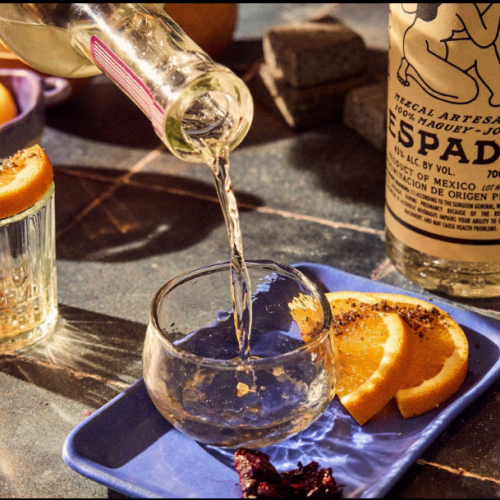
Espadín Mezcal — Start Here
The most common mezcal variety and the right entry point for first-timers. Flavour: smoke upfront (variable in intensity), followed by cooked agave sweetness, a mineral quality, and a long finish. Some espadíns are very smoky; others are gentle. Tell the mezcalero you are new and ask for a less intensely smoked example for your first pour. Brands to look for: Vago, El Silencio,Putaparió.
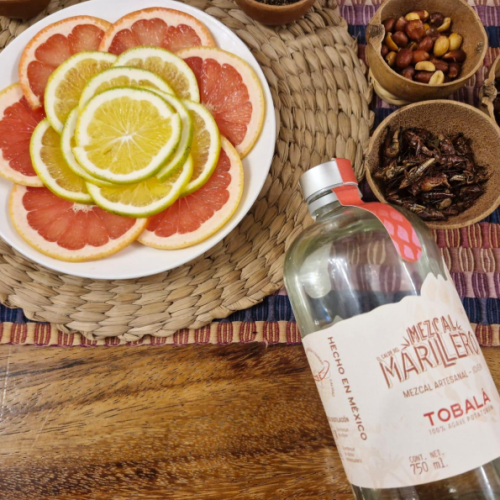
Tobalá Mezcal — The Next Level
Made from a wild agave that takes 12–15 years to mature and cannot be cultivated commercially — it must be found and harvested from the wild. Flavour: less smoke than espadín, more floral and fruit character, mineral backbone, and a weight and complexity that is difficult to describe except as "more". Significantly more expensive than espadín. Worth ordering once to understand why.
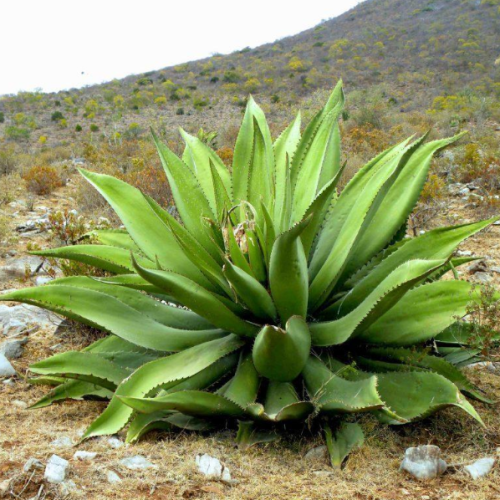
Tepeztate — The Extreme End
Made from an agave that takes 25 to 35 years to mature in rocky, inhospitable terrain. The flavour is unlike anything else in spirits — vegetal, wild, herbal, with notes that have been described as wet stone, tropical fruit, fresh herbs, and something that has no equivalent reference point. Very limited production. Very expensive. Not a first mezcal — but one of the most extraordinary spirits in the world if you get there.
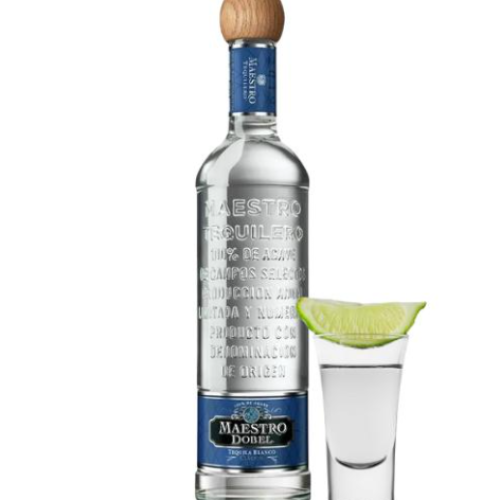
Blanco Tequila — The Baseline
Unaged tequila — the purest expression of blue agave. Flavour: bright, vegetal, citrus and green pepper notes, clean finish with minimal complexity compared to mezcal. This is what good tequila tastes like when it has not been modified by oak aging. The baseline against which cocktail tequilas (margaritas, palomas) are measured. Not the same as cheap mixto tequila.
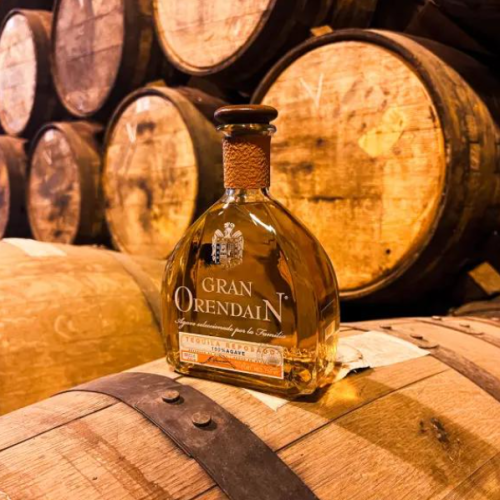
Reposado & Añejo Tequila — The Aged Versions
Reposado (rested 2–12 months in oak) and Añejo (aged 1–3 years in oak) tequilas pick up vanilla, caramel, and wood notes from the barrel that soften the vegetal agave character and add complexity. Good reposado and añejo tequilas are genuinely excellent sipping spirits. The oak aging also makes them more approachable for drinkers coming from whisky or bourbon — the flavour profile overlaps more than you might expect.
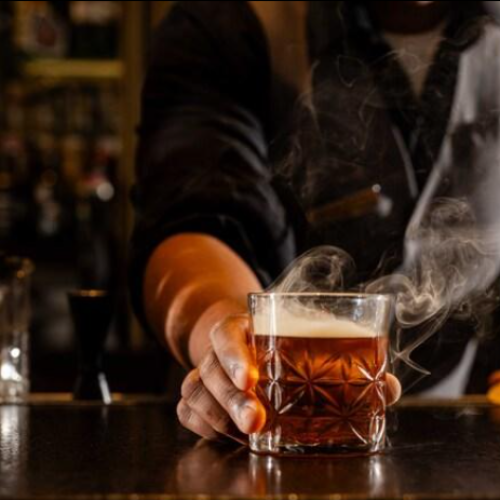
Mezcal Cocktails — When to Use Them
Mezcal in cocktails has become one of the defining bar trends of the past decade — the smoky backbone of espadín mezcal works extraordinarily well in place of tequila in a margarita (a mezcal margarita is called a smoky margarita or simply a mezcal margarita), in a Negroni variation, or in a simple highball with grapefruit soda (a mezcal paloma). The cocktail is the right introduction for drinkers who find mezcal neat too intense.
The Agave Varieties — Mezcal's Most Important Variable
If wine is defined by its grape variety, mezcal is defined by its agave. These are the six varieties you are most likely to encounter on a mezcal list in Tulum or Playa del Carmen — what they are, where they grow, and what they taste like.
🌵 Espadín — The Most Common
AGAVE ANGUSTIFOLIA
The workhorse of the mezcal world — approximately 80–90% of all mezcal produced uses espadín agave. Semi-cultivated (it grows wild but is also farmed), matures in 8–12 years, and can be harvested consistently enough to support commercial production.
FLAVOUR PROFILE: Smoke-forward (intensity varies enormously by producer and roasting style), cooked agave sweetness, green notes, mineral finish. The most familiar mezcal flavour for most first-time drinkers.
WHERE IT GROWS: Oaxaca primarily — the state responsible for over 85% of all mezcal production. Also Guerrero, Puebla, and other southern Mexican states.
WHAT TO ORDER: Any good espadín from a small Oaxacan producer. At a serious mezcalería on the Riviera Maya, the staff can walk you through the difference in smoke intensity between producers. This is the right starting point.
PRICE RANGE: $30–80 USD per bottle at retail. By the glass at a mezcalería: $8–15 USD.
🪨 Tepeztate — The 30-Year Spirit
AGAVE MARMORATA
The most extreme and most fascinating agave variety in mezcal production. Grows wild on steep, rocky cliff faces in Oaxaca — cannot be cultivated, must be found in the wild, takes 25 to 35 years to mature, and produces a very low juice yield relative to its size. Production is tiny. Bottles are allocated rather than stocked.
FLAVOUR PROFILE: The most unusual of all mezcal varieties — described by different tasters as: wet stone, tropical fruit, fresh herbs, green tea, jasmine, something that smells like rain on dry earth. It is genuinely unlike anything else in spirits and does not map neatly onto familiar flavour references. Some people love it immediately. Others find it challenging.
WHAT TO KNOW: A bottle of tepeztate mezcal from a respected producer contains liquid from a plant that spent 30 years growing in a cliff face before being harvested. The price reflects this. The flavour reflects this in a way that is difficult to articulate but unmistakable when you encounter it.
PRICE RANGE: $100–300+ USD per bottle. By the glass: $20–40+ USD at a dedicated mezcalería.
🏔️ Arroqueño — The Heavyweight
AGAVE AMERICANA VAR. OAXACENSIS
One of the largest agave varieties used in mezcal — piñas can weigh 200kg or more. Grows in the valleys of Oaxaca, matures in 12–18 years, and produces a mezcal with a bigger, richer character than most other varieties.
FLAVOUR PROFILE: Bold, full-bodied, complex — smoke, fruit, earth, and a distinct weight on the palate that makes espadín feel light by comparison. Some tasters find notes of dark chocolate, dried fruit, and leather. One of the most impressive mezcal varieties for drinkers coming from aged spirits backgrounds (whisky, cognac).
AT A MEZCALERÍA: Order arroqueño if you want to understand how different agave varieties can produce spirits that feel like completely different categories. The contrast between an arroqueño and an espadín from the same producer is striking.
PRICE RANGE: $70–160 USD per bottle. By the glass: $15–28 USD.
🌿 Tobalá — The Wild Agave
AGAVE POTATORUM
One of the most celebrated wild agave varieties in mezcal — cannot be cultivated commercially and must be harvested from its natural habitat in the highlands of Oaxaca and surrounding states. Matures in 12–15 years. Its wild status and slow maturation make it increasingly endangered as demand rises.
FLAVOUR PROFILE: Significantly less smoky than espadín. More floral, fruity (tropical fruit notes — guava, mango), mineral, and complex. Lighter body than espadín. Often described as the most elegant mezcal variety.
WHAT TO KNOW: Because tobalá is wild-harvested and slow-maturing, its production is inherently limited. Bottles labelled tobalá cost more because the raw material is genuinely scarce. The price premium is real and justified.
PRICE RANGE: $60–150+ USD per bottle. By the glass: $15–25 USD at a serious mezcalería.
AT A MEZCALERÍA: Order tobalá as your second or third pour after you have calibrated your palate on espadín. The contrast between the two is one of the most instructive flavour experiences in Mexican spirits.
🌾 Madrecuixe — The Herbaceous One
AGAVE KARWINSKII
A tall, narrow agave that grows in the valleys of Oaxaca — visually distinctive from the broader espadín and wild mountain varieties. Matures in 8–12 years. Produces a mezcal with a very specific flavour profile that makes it immediately identifiable to experienced mezcal drinkers.
FLAVOUR PROFILE: Herbal, vegetal (fresh herbs, green pepper, sometimes anise), earthy, with a characteristic texture that feels slightly thicker than other varieties. Less smoke-forward than espadín. Very food-friendly — pairs well with the Yucatecan cuisine you will encounter throughout the Riviera Maya.
WHERE TO FIND IT: At any serious mezcalería with a list of 30+ labels. It may be grouped under “Karwinskii” varieties alongside its relatives (Cirial, Cuishe, Tobasiche).
PRICE RANGE: $50–120 USD per bottle. By the glass: $12–20 USD.
🍹 Cuishe & Cupreata — The Others Worth Knowing
AGAVE KARWINSKII (CUISHE) / AGAVE CUPREATA (CUPREATA)
Two additional varieties worth knowing when reading a mezcal list:
CUISHE (Agave Karwinskii): Related to Madrecuixe — tall, narrow, valley-grown. Flavour: earthy, mineral, sometimes savoury with mushroom or umami notes. Less common than Madrecuixe but increasingly available at serious mezcalerías.
CUPREATA (also called Papalometl or Chino): Grown primarily in Guerrero state rather than Oaxaca — produces a mezcal with a distinctly different regional character. Flavour: rich, tropical fruit, earth, and a smoky quality that is different in character from Oaxacan smoke due to the different wood used for pit-roasting in Guerrero. If you encounter Guerrero mezcal on a list, the cupreata variety is the most likely candidate.
WHY THIS MATTERS: The combination of agave variety + region + producer creates an essentially unlimited matrix of flavour possibilities in mezcal — the opposite of tequila’s regulated consistency. A 50-label mezcal list is not showing you 50 versions of the same spirit. It is showing you 50 different spirits that happen to share a production category.
How to Drink Mezcal — The Right Way and the Wrong Way
There is a right way and a wrong way to drink mezcal. Neither involves judgment — the wrong way is simply a waste of a good pour. Here is the difference.
THE RIGHT WAY
THE VESSEL: A clay copita (a small, wide-mouthed cup) or a wide-rimmed glass — not a shot glass. The wide mouth allows the aromas to reach your nose, which is where most of the flavour experience happens. A shot glass eliminates the aroma and reduces the mezcal to its alcohol impact only.
THE TEMPERATURE: Room temperature — or very slightly below if the mezcalería stores bottles cool. Never over ice, never chilled. Cold suppresses the volatile compounds that carry the flavour. The mezcal you are drinking may have been in development for 30 years. Give it the temperature it needs to perform.
THE POUR: A small pour — 30ml (1 oz) is standard for a tasting. Enough to work with, not so much that you commit to finishing it before you have understood what it is.
THE APPROACH:
1. Smell it first — hold the copita under your nose and breathe in slowly. The first smell is often the most informative. Smoke, fruit, earth, mineral notes all register before you taste anything.
2. Take a small sip and let it sit on your tongue for 3–5 seconds before swallowing. Notice the texture, the sweetness or dryness, the smoke intensity.
3. After swallowing, breathe out through your nose — the retronasal experience is where the complexity reveals itself. This is when you find the fruit notes, the floral notes, the earth.
4. Wait 30 seconds. The finish of a good mezcal continues developing long after you swallow.
THE ACCOMPANIMENT: Many mezcalerías serve mezcal with a small plate of orange slices and sal de gusano (worm salt — a mixture of dried agave worm, chilli, and salt). The orange and salt reset the palate between pours. They do not go into the mezcal itself.
THE WRONG WAY
SHOOTING IT: A mezcal shot wastes everything that makes mezcal worth drinking. The aroma — which carries most of the flavour complexity — never reaches your nose. The liquid hits the back of your throat before your palate has registered anything except heat. You could be drinking anything. If the purpose is to drink quickly, tequila at a fraction of the price serves that purpose better.
MIXING IT INTO A STRONG COCKTAIL: A mezcal mixed with multiple strong flavour elements (sweet liqueurs, aggressive fruit juices, multiple spirits) eliminates the agave character that makes mezcal distinctive. A mezcal margarita — where the smoke plays against the lime and salt — is a legitimate and excellent cocktail. A mezcal mixed into a sugary club drink is not.
DRINKING IT ICE COLD: Ice suppresses the aromatic compounds. A glass of mezcal poured over a large ice cube is less complex than the same mezcal at room temperature by a significant margin. This is not a rule about sophistication — it is physics.
ADDING MIXERS TO A PREMIUM POUR: If you have ordered a tobalá or a tepeztate, drink it neat. The mezcalero who served it to you has spent time understanding that bottle. The agave plant it came from spent 15 to 30 years in the ground. It does not need soda water.
THE ONE EXCEPTION: If mezcal neat is too intense on first encounter — the smoke or the ABV is more than you expected — a small amount of still water (not sparkling) can open up the flavour and reduce the heat without eliminating the character. This is called cutting the spirit. It is acceptable and done by serious drinkers everywhere.
THE HONEST NOTE: These are guidelines for getting the most from a good mezcal, not rules for judging other people’s drinks. If you enjoy mezcal in a cocktail, enjoy the cocktail. The point is that before you decide what you prefer, you have actually tasted what the spirit is.
Reading a Mezcal Label — The Six Terms That Matter
Mezcal labels contain more information than most spirits categories — because the variation between producers, regions, and agave varieties is enormous and the label is how the producer communicates what is in the bottle. Here are the six terms that matter.
Agave Variety
The most important piece of information on any mezcal label — which agave was used. Espadín, tobalá, madrecuixe, tepeztate, arroqueño, and dozens of others. This single variable determines the flavour profile more than any other factor. If the label says “agave” without specifying the variety, that is a red flag on a premium bottle — a good producer specifies.
Estado (State of Origin)
Which Mexican state the mezcal comes from — Oaxaca (the dominant region, over 85% of production), Guerrero, Durango, San Luis Potosí, Zacatecas, and others. The state affects the flavour because the soil, climate, altitude, and local wood used for pit-roasting all vary by region. An Oaxacan espadín and a Guerrero cupreata taste different in part because of where they were made.
Mezcalero (Producer)
The name of the individual producer or family who made the mezcal — the artisanal equivalent of a winemaker credit. Good mezcal brands (Vago, Wahaka, Los Danzantes, Montelobos) name the specific mezcalero on the label. This matters because the same agave variety from two different producers in the same village can taste significantly different — the mezcalero’s specific techniques, wild fermentation environment, and still type all contribute.
Ensamble
A mezcal made from two or more agave varieties blended together — the mezcal equivalent of a blend. Ensambles are not inferior to single-variety mezcals; they are a different expression. A well-made ensamble can be more complex than either of its component varieties alone. Look for the specific varieties listed on the label (e.g. “Ensamble: Espadín 70% / Tobalá 30%”) — good producers are transparent about the blend.
Joven / Reposado / Añejo
Age statements also apply to mezcal — Joven is unaged (the most common and usually most expressive of agave character), Reposado is aged 2–12 months in oak, and Añejo is aged over 1 year. Unlike tequila, where aging is sometimes used to smooth out industrial production shortcuts, mezcal aging is most meaningful when applied to spirits complex enough to benefit from oak interaction. Most serious mezcal enthusiasts prefer joven — aging can mask the agave character that makes mezcal distinctive.
NOM / CRM Number
The NOM (Norma Oficial Mexicana) or CRM (Consejo Regulador del Mezcal) certification number on the label confirms that the mezcal meets official production standards and was produced in a certified region. Every legitimate mezcal sold commercially should have one. The absence of a CRM number on a bottle presented as mezcal in Mexico is a warning sign — either a very small informal producer not yet certified, or something mislabelled. At a serious mezcalería, every bottle on the shelf will be certified.
The Best Mezcal Bars on the Riviera Maya
The Riviera Maya — particularly Tulum and Playa del Carmen — has developed one of the finest mezcal bar scenes in Mexico over the past decade. These are the six best places to put this guide into practice.
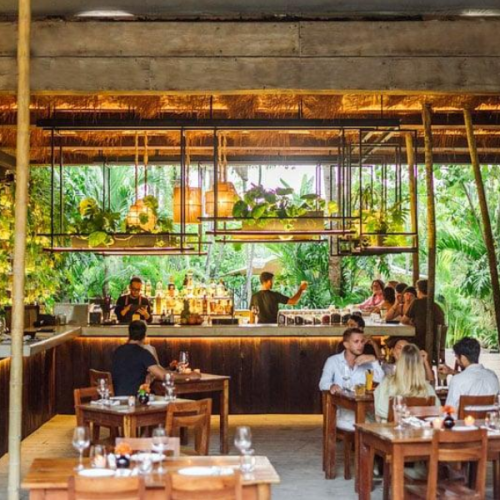
Casa Jaguar — Tulum Beach Road
One of the most respected mezcal programs on the entire Riviera Maya — a serious list of artisanal mezcals organised by agave variety and region, a bar team that genuinely knows the bottles, and a setting on the Tulum beach road that makes the experience feel like exactly where you want to be. Not a nightclub with mezcal on the menu — a mezcalería that also happens to have excellent food and music. The benchmark for mezcal in Tulum.
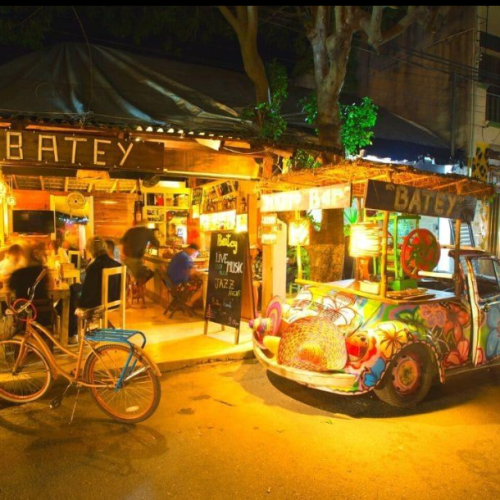
Batey — Tulum Beach Road
A mezcal bar with a strong educational philosophy — the staff at Batey run the experience as a guided introduction rather than a transaction. Tell them you are new to mezcal and they will walk you through three or four pours that cover the spectrum from gentle espadín to something more challenging. One of the best first mezcal experiences on the coast for travellers who want to understand what they are drinking.
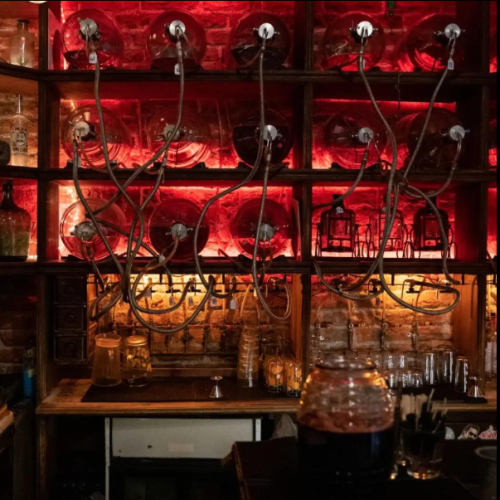
Clandestino — Playa del Carmen
The most serious cocktail bar in Playa del Carmen and the best place on the coast to experience mezcal in a cocktail context — the bar team uses artisanal spirits in constructions that showcase rather than mask the agave character. The mezcal margarita here is the benchmark version. Also one of the most beautifully designed bar spaces on the Riviera Maya.
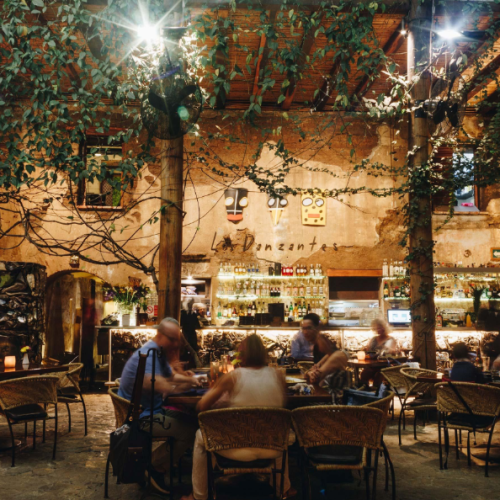
Los Danzantes — Multiple Locations
The restaurant and mezcal brand that helped put Oaxacan mezcal on the international map. Los Danzantes operates both a production facility in Oaxaca and restaurant/bar locations across Mexico including the Riviera Maya. The list focuses heavily on their own production alongside curated third-party labels — an excellent education in what a serious mezcal producer looks like from the inside out.
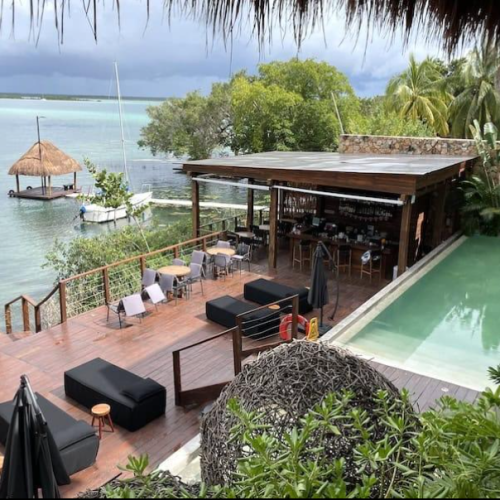
Singular — Bacalar
A small, carefully curated mezcal and craft spirits bar in Bacalar town — the best reason to have a second drink in a destination that otherwise winds down by 10pm. The list is shorter than the Tulum bars but every bottle has been personally selected. The setting — a small bar on the lagoon road with the dark water visible from the terrace — is one of the most atmospheric drinking environments in Mexico.
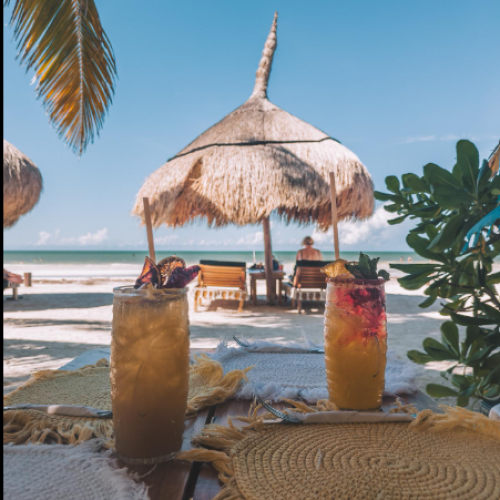
Roots Bar — Holbox
Holbox is not a mezcal destination — it is a beer-and-sunset destination. But Roots Bar on the beachfront maintains a small but considered selection of artisanal mezcals alongside the cold Modelos that are the island's actual currency. The combination of a clay copita of espadín and a Holbox Gulf of Mexico sunset is one of the most pleasant ways to end a day anywhere on the Riviera Maya.
Planning Your Riviera Maya Trip?
From the mezcalerías of Tulum to the lagoon-edge bars of Bacalar — our destination guides cover everything you need to plan the right trip for you.
Mezcal vs Tequila — Common Questions
Is mezcal stronger than tequila?
Usually yes — artisanal mezcal typically runs at 42–55% ABV, while tequila is generally regulated at a minimum of 38% and most commercial brands land at 40%. The higher ABV of mezcal is partly a product of the distillation method (small pot stills running at lower volume tend to produce higher-proof distillate) and partly a deliberate choice by producers who believe the agave character is better expressed at higher strength. Some mezcals run even higher — certain bacanora (a mezcal category from Sonora) and raicilla (from Jalisco) expressions reach 55–60% ABV. Drink them slowly.
What is the worm in mezcal?
The gusano de maguey — agave worm — that appears in some mezcal bottles is a marketing tradition rather than a quality indicator, associated primarily with a specific brand (Monte Albán) in the mid-20th century that used it as a differentiator. The worm is actually the larva of a moth (Hipopta agavis) that lives in agave plants — it is edible, high in protein, and used in traditional Mexican cooking. Its presence in a bottle of mezcal does not indicate quality, authenticity, or any specific flavour characteristic. Most serious artisanal mezcal producers do not include it. The worm in the bottle is not a mezcal tradition — it is a marketing decision made by one producer in the 1950s that became widely associated with mezcal internationally.
What is the difference between mezcal and raicilla?
Raicilla is a traditional agave spirit from Jalisco state that predates both mezcal and tequila as a regulated category — it was made in the mountains of Jalisco for centuries under the radar of Spanish colonial alcohol taxes. It received its own Denomination of Origin in 2019. Raicilla uses local Jalisco agave varieties (primarily Maximiliana and Valenciana) and production methods specific to the region — the result is a spirit with a flavour profile distinct from both Oaxacan mezcal and Jalisco tequila. If you encounter raicilla on a mezcalería list in Tulum, order it as an education in how different a spirit the same broad category of "agave spirit" can produce when the variety and region change completely.
Why does mezcal taste smoky?
The smoke in mezcal comes from the pit-roasting of the agave piñas before fermentation — the hearts of the agave plant are cooked in a conical earth pit lined with hot volcanic rocks and covered with earth and plant fibre for 3 to 7 days. The fire and the earth become physically embedded in the agave fibres during roasting and carry through fermentation and distillation into the final spirit. The intensity of smoke varies by producer, wood type, pit depth, and roasting time — which is why some mezcals are gently smoky and others are intensely so. Tequila is not smoky because the agave is steam-cooked in ovens rather than pit-roasted.
Can I buy good mezcal to bring home from Mexico?
Yes — and it is one of the best value souvenirs from a Mexico trip. A bottle of excellent artisanal mezcal that costs $30–50 USD in Mexico may retail for $60–100 USD or more in the US, Canada, or Europe when it is available at all. The Cancún airport duty-free has a reasonable mezcal selection — better than most airport duty-free selections globally, though not as good as a dedicated mezcalería. Buy in town where possible for better selection and better prices. Standard customs allowance for spirits: 1 litre duty-free per person into the US; 1.14 litres into Canada. Declare anything above this at customs.
What is the best mezcal for someone who hates the taste of smoke?
Start with a tobalá or a madrecuixe rather than espadín — these varieties produce significantly less smoky mezcal because the agave's own flavour character (floral and fruity for tobalá, herbal for madrecuixe) is strong enough to balance the smoke. Tell the mezcalero at any good bar that you prefer less smoke — they will guide you to the right pour. If smoke is genuinely a dealbreaker, consider a raicilla (Jalisco agave spirit with minimal smoke) or a sotol (a spirit made from a desert plant related to agave, native to Chihuahua, with a distinct non-smoky character). Both are increasingly available at serious agave spirit bars on the Riviera Maya.
Keep Exploring
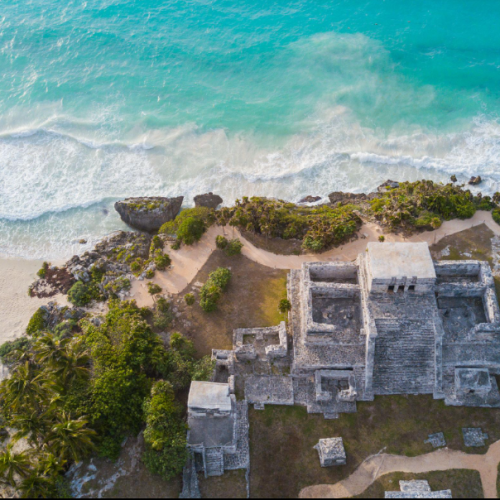
Bacalar — The Lake of Seven Colors
42 kilometres of freshwater lagoon, boutique lakefront hotels, cenote swimming, and a pace of life that converts everyone who visits. The Riviera Maya destination that does not appear in the beach club photos — and is often better.
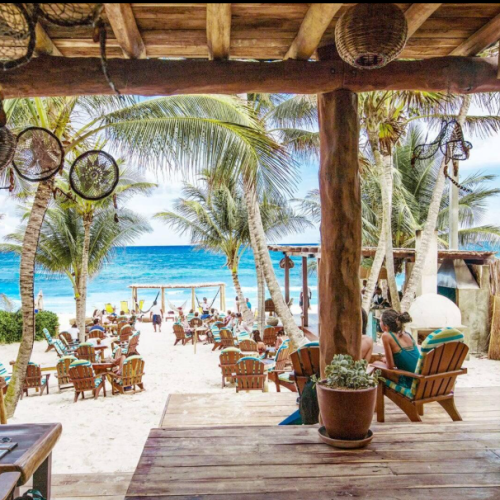
Tulum Complete Destination Guide
The ruins, the cenotes, the beach road, the mezcalerías, and the honest difference between the Tulum that Instagram shows and the one that actually exists.
Playa del Carmen Complete Destination Guide
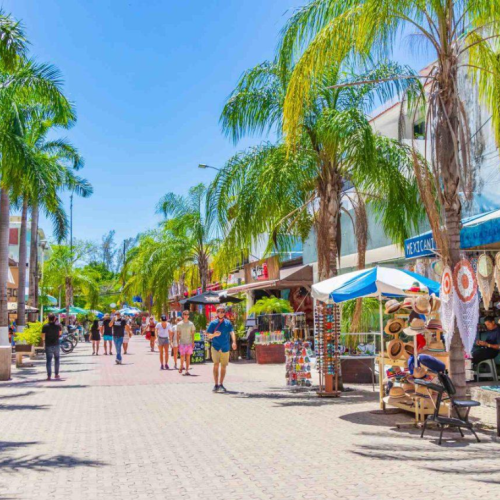
The Riviera Maya’s most walkable town — 5th Avenue, the best restaurant and bar scene on the coast, Cozumel by ferry, and El Fogón’s legendary tacos al pastor.
Get the Riviera Maya in Your Inbox
Weekly travel guides, property insights, and insider tips from Mexico’s Caribbean coast — delivered every week. No spam. Unsubscribe anytime.