
YOUR STEP-BY-STEP GUIDE
How to Buy Property in Mexico
Buying property in Mexico as a foreigner is straightforward — when you understand the process. This guide walks you through every step, from choosing your location to receiving your title deed.
Your Path to Mexican Caribbean Property Ownership
Four numbers that define the Mexican Caribbean buying process — transparent, straightforward, and proven by hundreds of international buyers.
A clear, proven process from property search to title deed — no surprises, no shortcuts.
The average buyer’s transfer tax in Quintana Roo — one of the lowest property tax entry points in the Americas.
The fideicomiso bank trust secures your ownership rights for 50 years — renewable indefinitely with full transfer rights.
From accepted offer to registered title deed — a typical Mexican Caribbean property transaction completes in under 6 months.
Can Foreigners Buy Property in Mexico?
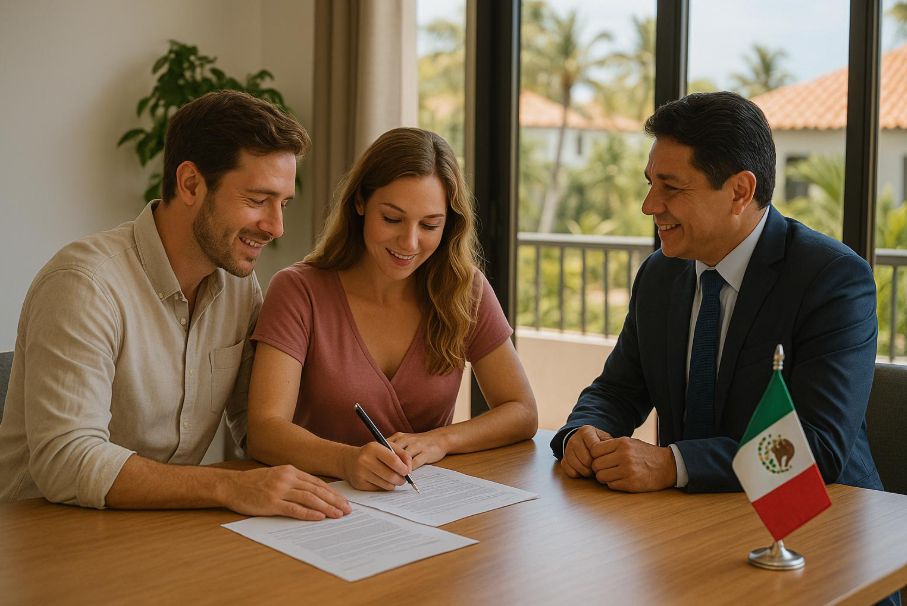
Yes — and thousands do every year.
Foreigners can legally own property anywhere in Mexico. In the restricted zone — which covers all land within 50 kilometres of the coastline and 100 kilometres of international borders — ownership is held through a fideicomiso: a bank trust that grants you full ownership rights equivalent to direct title.
Outside the restricted zone, foreigners can hold direct title (escritura) in their own name, exactly as a Mexican citizen would.
The Riviera Maya — Cancún, Playa del Carmen, Tulum, Holbox, Bacalar, Mahahual, Puerto Morelos — falls within the restricted zone. This means almost every property purchase in this region will use the fideicomiso structure.
This is not a limitation. The fideicomiso is a mature, internationally recognised legal instrument that has been used by foreign buyers in Mexico for over 40 years. It provides the same ownership security as direct title — you can sell, rent, renovate, inherit, and mortgage the property exactly as if you held it outright.
The process is straightforward. The key is working with the right professionals.
Your Complete Guide to Buying Property in Mexico
Everything a foreign buyer needs to know — from choosing your location to collecting your title deed. Follow each step in order and your transaction will be straightforward.
The 7 Steps to Buying Property in Mexico
The Mexican Caribbean offers seven distinct destinations — each with a different investment profile, rental market, lifestyle, and price point.
TULUM — Best for capital appreciation
The fastest-appreciating market on the Riviera Maya. Property values have increased 300%+ in the past decade. Strong short-term rental demand driven by booming tourism. Entry level: from $150,000 USD for a studio. Premium beach road: $500,000–$3M+.
PLAYA DEL CARMEN — Best for rental yield
The most established rental market on the coast. High year-round occupancy from tourism, expats, and digital nomads. Strong resale market. Entry level: from $120,000 USD. Seafront: $300,000–$2M+.
CANCÚN — Best for infrastructure and liquidity
The most liquid property market in the region — easiest to buy and easiest to sell. Hotel Zone condos generate strong vacation rental income. Entry level: from $100,000 USD. Premium Hotel Zone: $400,000–$5M+.
PUERTO MORELOS — Best for value relative to location
30 minutes from Cancún airport, 30 minutes from Playa del Carmen, reef national park offshore. Entry level: from $150,000 USD. Premium beachfront: $400,000–$1.5M.
BACALAR — Best for emerging market opportunity
The Riviera Maya’s fastest-emerging secondary market. Lagoon-view properties have doubled in value since 2019. Entry level: from $80,000 USD. Premium lagoon-front: $300,000–$800,000.
HOLBOX ISLAND — Best for exclusivity
A car-free island with strict development controls — supply is permanently limited by regulation, supporting long-term values. Entry level: from $200,000 USD. Beachfront: $500,000–$2M+.
MAHAHUAL — Best for long-term positioning
The most affordable entry point on the coast with the highest upside potential as infrastructure improves. Entry level: from $60,000 USD for land. Beachfront: $200,000–$600,000.
PROPERTY TYPES TO CONSIDER:
– Condo in a development — lower entry price, managed rental program, less flexibility
– Standalone villa — higher price, full control, higher rental income ceiling
– Land — lowest entry price, highest risk, requires managing a construction project
– Pre-construction — discounted price, 18–36 month wait, higher completion risk
Mexico does not have a mandatory real estate licensing system in most states — anyone can call themselves a real estate agent. Choosing the right agent is one of the most important decisions in the buying process.
WHAT TO LOOK FOR:
– AMPI membership (Asociación Mexicana de Profesionales Inmobiliarios) — the Mexican national realtor association. Members follow a code of ethics and undergo ongoing training.
– Bilingual (Spanish and English) with documented transaction history
– Specific expertise in your target destination — a Tulum specialist may not know Bacalar well
– References from previous foreign buyers — ask for these and follow up
– Transparent commission structure — typically 5–6% of purchase price, paid by the seller not the buyer
WHAT YOUR AGENT SHOULD DO:
– Identify properties matching your criteria and budget
– Arrange viewings (by video if you cannot be present in person)
– Provide comparative market analysis for any property you are seriously considering
– Introduce you to a qualified notario and independent real estate lawyer
– Guide you through the offer and negotiation process
– Coordinate between all parties through to closing
RED FLAGS — WALK AWAY IF:
– Agent asks for a deposit paid directly to them rather than into escrow
– Agent discourages you from engaging an independent lawyer
– Agent cannot provide AMPI membership or verifiable transaction history
– A property is priced significantly below market with pressure to decide quickly
Due diligence is the investigation of a property’s legal status before you commit to purchasing it. This step protects you from the most serious risks in Mexican property transactions.
YOUR REAL ESTATE LAWYER MUST VERIFY:
TITLE SEARCH (Estudio de Título):
– Confirm the seller holds clean, unencumbered title to the property
– Check the Registro Público de la Propiedad for any liens, mortgages, or encumbrances
– Verify no unpaid debts are attached to the property
– Confirm property boundaries match the cadastral (survey) records
PERMITS AND LICENSES:
– Verify all construction was completed with proper building permits
– Confirm a valid certificate of occupancy (certificado de habitabilidad) exists
– Check all required approvals from SEMARNAT (environmental authority) and municipal planning are in place
EJIDO LAND CHECK:
– Confirm the property is NOT ejido land — communal agricultural land that cannot be legally sold to private buyers without a complex conversion process
– Ejido land issues are the single most common cause of title problems in the Riviera Maya — particularly in Tulum where rapid development has outpaced proper land tenure regularisation
HOMEOWNERS ASSOCIATION:
– Review the condominium rules (reglamento) and annual budget
– Confirm maintenance fee amounts and payment history
– Check for any outstanding HOA debts on the property — these transfer with the property to the new owner at closing
TIMELINE: Due diligence takes 2–4 weeks. Never allow anyone to rush this process. A legitimate seller will always accommodate proper due diligence. Anyone who won’t is a red flag.
Once due diligence is complete and satisfactory, you make a formal written offer. If accepted, both parties sign a Promesa de Compraventa — a binding preliminary purchase agreement.
THE OFFER:
– Submit in writing through your agent
– Specify: offered price, deposit amount, any contingencies, and proposed closing date
– Most Riviera Maya transactions are negotiable by 5–15% from asking price — your agent advises on current conditions
– All negotiations and transactions are denominated in US dollars
THE PROMESA DE COMPRAVENTA:
This legally binding contract must include:
– Full legal description of the property
– Agreed purchase price in USD
– Deposit amount — typically 10–30% of purchase price
– Closing date
– Consequences of default — if the seller defaults, they owe you double the deposit; if you default, you forfeit the deposit
– List of any items included in the sale (furniture, appliances, equipment)
DEPOSIT PAYMENT:
– Pay into a licensed escrow account only — NEVER directly to the seller or agent
– Use a licensed Mexican escrow company or a US escrow service familiar with Mexican transactions
– Get written confirmation that funds are held in escrow before proceeding further
YOUR LAWYER MUST REVIEW AND APPROVE THIS CONTRACT before you sign it. Do not sign anything you do not fully understand in both languages.
The fideicomiso is the legal structure through which foreigners own property in Mexico’s restricted zone — which covers all Riviera Maya destinations.
WHAT IS A FIDEICOMISO?
A trust agreement between three parties:
– Fideicomitente — the seller who transfers the property into the trust
– Fiduciario — the Mexican bank that holds legal title on your behalf
– Fideicomisario — you, the foreign buyer, who holds all rights of ownership as beneficiary
AS THE BENEFICIARY YOU HAVE THE FULL RIGHT TO:
– Use and occupy the property
– Rent the property and keep all rental income
– Sell the property and receive all proceeds
– Renovate or develop the property (with required permits)
– Pass the property to your heirs through the trust
– Mortgage the property
The bank holds the legal title but has no right to use, benefit from, or dispose of the property. It acts solely as the title holder on your behalf.
WHICH BANK?
All major Mexican banks offer fideicomiso services:
Scotiabank México | BBVA México | Banamex (Citibanamex) | HSBC México | Banorte
Your notario will coordinate with the bank. You do not need to choose independently.
FIDEICOMISO COSTS:
– Setup fee: $500–1,500 USD (one-time)
– Annual maintenance fee: $500–700 USD per year paid to the bank
– Duration: 50 years, renewable indefinitely
– Transferable: when you sell, the buyer takes over the existing trust or establishes a new one
All Mexican real estate transactions must be formalised before a Notario Público — a government-appointed legal professional with significantly more authority than a notary in the US, UK, or Canada.
WHAT THE NOTARIO DOES:
– Conducts an independent legal review of the title and transaction documents
– Calculates and collects all transfer taxes and fees on behalf of the government
– Prepares the escritura (title deed)
– Registers the transaction with the Registro Público de la Propiedad
– Coordinates the fideicomiso establishment with the bank and SRE permit
IMPORTANT: The notario is neutral — they represent the transaction, not either party. You must have your own independent real estate lawyer reviewing everything separately.
CLOSING COSTS — BUDGET FOR THESE:
| Cost Item | Approximate Amount |
|—|—|
| Acquisition Tax (ISAI) | 2–4% of purchase price |
| Notary Fees | 1–2% of purchase price |
| Fideicomiso Setup | $500–1,500 USD |
| SRE Permit | $1,000–1,500 USD |
| Registration Fees | 0.5–1% of purchase price |
| Your Lawyer’s Fees | $1,500–3,000 USD |
| Bank Trust First Year Fee | $500–700 USD |
TOTAL CLOSING COSTS: Budget 6–8% of the purchase price on top of the property price.
EXAMPLE:
Property price: $300,000 USD
Closing costs at 7%: $21,000 USD
Total funds needed at closing: $321,000 USD
CAN I CLOSE REMOTELY?
Yes. Grant a Power of Attorney (Poder Notarial) to your lawyer. They attend closing and sign on your behalf. This is common, legal, and fully supported by the professional infrastructure in the Riviera Maya.
The final step. Your property is yours. Here is what happens after closing.
REGISTRATION:
The notario registers the escritura with the Registro Público de la Propiedad. This takes 4–8 weeks after closing. You receive a certified copy of the registered deed once complete. The property is legally yours from the moment you sign at closing — registration makes it public record.
HANDOVER:
– Receive all keys, access codes, and physical possession
– Document the condition at handover — photos and video of every room
– Obtain all utility account details: CFE (electricity), water, gas, internet
– Transfer utility accounts to your name or the trust name
PROPERTY MANAGEMENT:
If you are not living in the property full-time, engage a property manager at or before closing.
– Property management fee: typically 20–30% of gross rental income for full management
– Covers: guest check-in, cleaning, maintenance, rental platform management, emergency response
TAXES AS AN OWNER:
– Annual property tax (predial): Very low — typically $200–800 USD per year
– Rental income tax: Declare rental income in Mexico (and possibly your home country — check your tax treaty situation with a Mexican accountant)
– Capital gains tax on sale: Significantly reduced if the property has been your primary residence for 2+ years
RESIDENCY OPTIONS:
Property ownership supports but does not automatically grant Mexican residency.
– Temporary Resident Visa (Residente Temporal): Renewable annually for up to 4 years
– Permanent Resident Visa (Residente Permanente): Available after 4 years of Temporary Residency
Contact a Mexican immigration lawyer for current income and asset thresholds — these are updated annually by the Mexican government.
The 6 Most Common Mistakes Foreign Buyers Make
Never pay any money — deposit, reservation fee, or anything else — before your lawyer has begun and is satisfied with the due diligence process. A legitimate seller will always accommodate proper due diligence. Anyone who pressures you to pay before it is complete is a serious red flag.
Some agents and developers offer to handle the legal work themselves or recommend a lawyer who represents all parties. Never accept this. Your lawyer must work exclusively for you — no relationship with the seller, developer, or agent. The cost of an independent lawyer ($1,500–3,000 USD) is the best money you will spend in the entire transaction.
Ejido land is communal agricultural land that cannot be legally sold to private buyers without a complex conversion process that can take years and may fail entirely. Tulum in particular has significant ejido land issues due to rapid development outpacing proper land regularisation. Your lawyer must specifically confirm in writing that a property is NOT ejido land before you proceed.
Closing costs in Mexico run 6–8% of the purchase price — significantly higher than many foreign buyers expect. On a $300,000 USD property that is $18,000–24,000 USD on top of the purchase price. Failure to budget for this has caused transactions to collapse at the closing table. Know your total cash requirement before you make any offer.
All Mexican property contracts are in Spanish. Your lawyer must provide a full English translation and explain every clause before you sign anything. Saying you did not understand what you signed is not a legal defence in Mexican courts. If anyone pressures you to sign quickly without adequate time to review — walk away.
If you are not living in the property full-time, you need a property manager engaged before or at closing. Riviera Maya properties require active maintenance — particularly during the rainy season (June–November) when humidity, mould, and pest issues can cause significant damage to an unmanaged property in a matter of weeks.
Estimate Your Total Investment
Use this simple calculation to estimate your total investment including closing costs.
Budget 6–8% of the property price in addition to the purchase price.
Property Price × 1.07 = Approximate Total Investment
Example: $300,000 USD × 1.07 = $321,000 USD total funds required
For a personalised cost breakdown based on a specific property, location, and your nationality — speak to our team directly.
The 4 Professionals You Need
A successful Mexican property purchase requires four key professionals working together. Each one has a distinct role — and none of them is optional.
Bilingual Real Estate Agent
Finds properties, arranges viewings, negotiates the price, and coordinates all parties throughout the process. Must be AMPI-registered. Commission of 5–6% is paid by the seller — your agent costs you nothing directly.
Mexican Real Estate Lawyer
Reviews all contracts, conducts due diligence, identifies legal risks, and protects your interests from offer to closing. Independent from the notario and working exclusively for you. Fee: $1,500–3,000 USD. This is non-negotiable.
Notario Público
Government-appointed legal professional who formalises the transaction, collects taxes, prepares the deed, and registers the title. Represents the transaction — not either party. Appointed jointly or by the buyer.
Mexican Tax Accountant
Advises on rental income tax, capital gains planning, and the tax treaty between Mexico and your home country. Engage before closing to structure your ownership in the most tax-efficient way possible.
Buying Process — Your Questions Answered
Phasellus ut tempus eros, ut ultricies libero
How long does the buying process take in Mexico?
From accepted offer to registered title, budget 60–180 days. Pre-construction purchases add the full construction timeline — typically 18–36 months — before physical delivery. Cash purchases close faster than financed ones. Remote closings using Power of Attorney proceed as efficiently as in-person closings.
Can I rent out my Mexican property on Airbnb?
Yes. Short-term rental through Airbnb and VRBO is legal and widely practiced across the Riviera Maya. You must declare rental income to the Mexican tax authority (SAT) and potentially in your home country depending on your tax treaty situation. Property management companies in Tulum, Playa del Carmen, and Cancún specialise in vacation rental management and can handle all aspects including tax registration.
Do I need to visit Mexico to buy property there?
No. Many foreign buyers complete purchases entirely remotely. You grant a Power of Attorney (Poder Notarial) to your Mexican lawyer who attends all signings and closing on your behalf. Virtual property viewings, remote contract review, wire transfer deposits, and remote closing are all standard practice in the Riviera Maya market.
Can I get a mortgage in Mexico as a foreigner?
Yes, but options are limited. Mexican banks mortgage to foreigners in some circumstances but with significant documentation requirements. US-based lenders with Mexico programs may offer better terms. Many foreign buyers use home equity in their country of residence to fund Mexican purchases. Cash transactions are significantly simpler and far more common in the Riviera Maya market.
What happens to my Mexican property when I die?
You designate beneficiaries when you establish the fideicomiso trust — the property transfers directly to them on your death without going through Mexican probate. This is one of the significant practical advantages of the fideicomiso structure. Keep your beneficiary designations updated and ensure your estate documents in your home country acknowledge the existence of the Mexican property.
Is now a good time to buy in the Mexican Caribbean?
The Riviera Maya property market has shown consistent appreciation for over 20 years. The fundamentals — growing international tourism, major infrastructure investment including the Tren Maya railway, expanding air connectivity, and limited coastal supply — remain firmly in place. That said, location and property selection matter enormously within the market. The best time to buy is when you have completed proper due diligence and are financially ready to proceed.
Ready to Start Your Mexican Caribbean Property Journey?
Our team works with AMPI-registered bilingual agents, experienced property lawyers, and trusted notarios across the entire Riviera Maya. Whether you have a specific property in mind or are just beginning to explore your options — we can connect you with the right professionals for your situation, your budget, and your target destination.