
QUINTANA ROO, MEXICO
Tulum
Ancient ruins on a Caribbean cliff. Cenotes that go down forever. Jungle eco-hotels that feel nothing like a hotel. Tulum is the most talked-about destination on the Riviera Maya — and the most misunderstood.
Best Time: Nov–Apr
From Cancún: 2hrs ADO
Currency: MXN Peso
Caribbean Sea
The Riviera Maya's Most Talked-About Town
Every travel magazine has written about Tulum. Every Instagram account has posted the ruins. Every wellness influencer has done a cenote shoot here. And yet — the actual experience of arriving in Tulum for the first time still stops people.
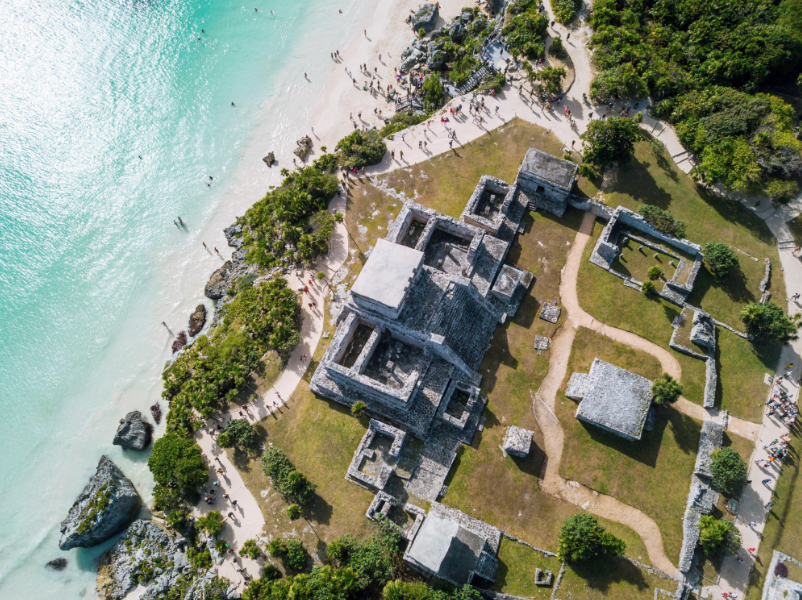
The Mayan ruins of Tulum sit on a 12-metre limestone cliff directly above a Caribbean beach. The colour of that water, the scale of those stones, the fact that people were living and worshipping here a thousand years before the Hotel Zone existed — it hits differently from every photo you have already seen.
But Tulum is not just its ruins. It is a destination that genuinely rewards slow travel. Rent a bike and ride to cenotes through the jungle. Eat at a family palapa on the beach road. Swim in a cave. Watch bioluminescent plankton turn the water electric blue at night. Eat a breakfast that costs $2 at a local comedor. Then eat at a $200 tasting menu at a beach-forest restaurant that barely has electricity.
The contradiction is the point. Tulum contains multitudes — ancient and hyper-modern, local and intensely international, free and wildly expensive. Understanding which version of Tulum you are looking for, and knowing where to find it, is what this guide is for.
Top Things to Do in Tulum
Tulum rewards the curious traveller who gets off the beach road — these are the experiences that make it one of the most extraordinary destinations in the Americas.
Tulum Archaeological Zone
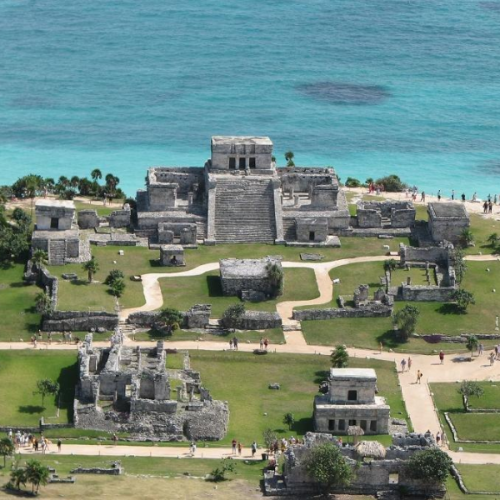
The only Mayan ruin site in Mexico built directly above a beach. El Castillo — the main pyramid — sits on the edge of a limestone cliff with the Caribbean below it. Arrive at opening time (8am) before the tour buses arrive. Allow 2 hours, hire a site guide at the entrance for the full historical context, and swim from the small beach beneath the ruins after your visit. Entry ~$8 USD. One of the most photogenic ancient sites in the world.

Gran Cenote
The most accessible and most beautiful cenote in the Tulum area — a semi-open cave system with crystalline fresh water, stalactites, and resident turtles who swim alongside you. Located 3km from Tulum town by bike or taxi. Arrive before 10am to beat the crowds. Reef-safe sunscreen only — enforced strictly. Entry ~$20 USD. The best single half-day activity in Tulum.
Cenote Dos Ojos
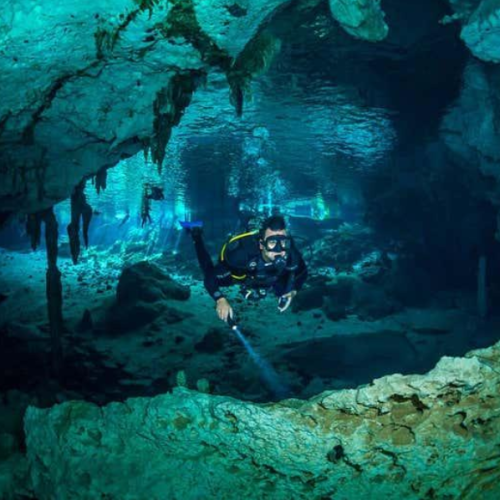
One of the great underground snorkelling experiences in the world — a flooded cave system with two connected cenote openings (the “two eyes”) and passages that go deep into the jungle floor. The light through the cave mouth at midday creates underwater beams that feel completely unreal. Guided snorkelling tours available. Entry ~$18 USD. Located 25km north of Tulum near Akumal.
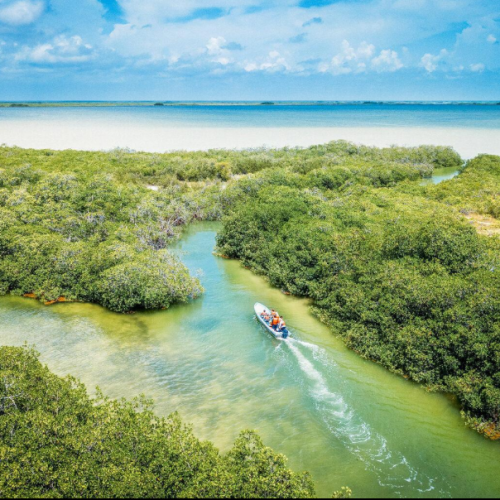
Sian Ka'an Biosphere Reserve
A UNESCO World Heritage Site protecting 1.3 million acres of jungle, mangrove, reef, and coastline directly south of Tulum. The boat tour through the lagoon channels — where the current pulls you through the mangroves — is one of the most unique natural experiences in Mexico. Dolphin sightings are common. Guided tours from Tulum: ~$70–90 USD. Half-day commitment. Genuinely unmissable for nature travellers.
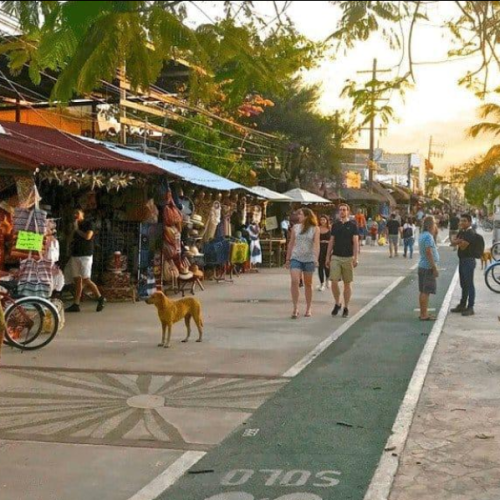
Tulum Beach Road at Sunset
The beach road (Boca Paila) is a 10km strip of jungle-facing boutique hotels, beach clubs, and restaurants — no chain hotels, no resort signs, no concrete towers. Rent a bike ($5/day), ride the full length in the late afternoon, stop for a drink at whatever catches your eye, and time your return for sunset. The combination of Caribbean light filtering through the jungle at dusk is Tulum at its best and most itself.
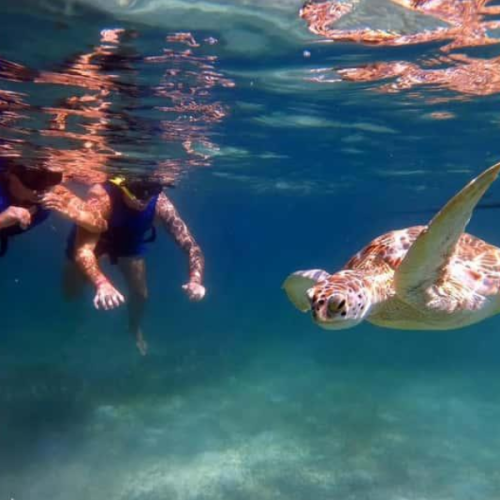
Akumal — Swim with Sea Turtles
Twenty minutes north of Tulum, Akumal Bay is a natural sea turtle feeding ground where green and loggerhead turtles graze on the seagrass year-round. Enter directly from the beach — no boat required. Best before 9am before tour groups arrive. Use reef-safe sunscreen and maintain distance from the turtles (2 metres). Free beach access, snorkel rental ~$10 USD. One of the most reliable wildlife experiences on the entire Riviera Maya.
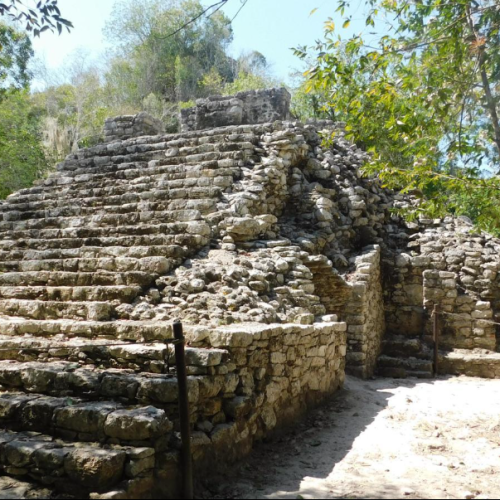
Coba Ruins — Climb the Pyramid
One hour north of Tulum, Cobá contains the tallest climbable pyramid in the Yucatán — Nohoch Mul, 42 metres high, with a rope-assisted climb to the top platform. The view over the jungle canopy from the summit is extraordinary. Unlike Chichén Itzá, Cobá still allows pyramid climbing (subject to ongoing policy — verify before visiting). Combine with a visit to the jungle cenote inside the park. Entry ~$9 USD. Allow 3–4 hours.
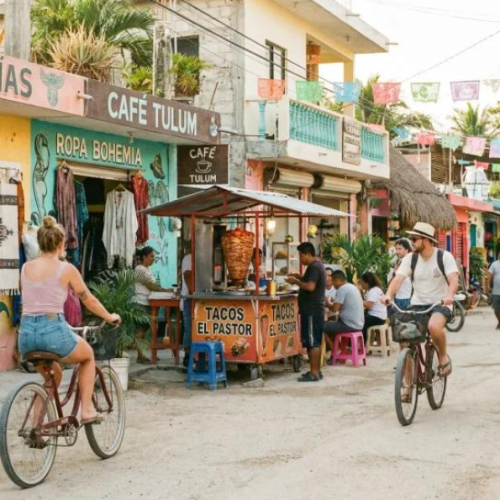
Tulum Pueblo — Eat Like a Local
The tourist-facing beach road gets all the attention — Tulum Pueblo, the actual town a kilometre inland, gets almost none. This is where locals eat. Tacos at $0.50 from roadside stands. Fresh juice for $1. Tamales in the morning market. The best tostadas de ceviche in the region at Antojitos la Chiapaneca. The price difference between Pueblo and the beach road is 10x — and Pueblo is frequently better.
Tulum's Best Beaches & Cenotes
Tulum’s coastline is unlike anything else on the Riviera Maya — smaller, wilder, and backed by jungle rather than resort towers. The cenotes are the other half of the Tulum natural experience — some of the most spectacular freshwater systems on earth.
Playa Ruinas — Most Iconic
The small beach directly beneath the Tulum Archaeological Zone — the most photographed beach in Mexico. Swim in the shadow of a 12th-century Mayan pyramid. Accessible only from inside the ruins site. Entry included with ruins ticket ~$8 USD.
Playa Paraíso — Most Beautiful
Consistently ranked among the most beautiful beaches in Mexico — a long, wide stretch of white sand and turquoise water with no resort development, backed directly by jungle. The definitive Tulum beach experience. Free access at the northern end.
Gran Cenote — Best Cenote
The most accessible and spectacular cenote near Tulum — crystal freshwater, resident turtles, cave stalactites, and light beams through the cave mouth at midday. 3km from Tulum town by bike. Entry ~$20 USD. Reef-safe sunscreen required.
Cenote Calavera — Most Adventurous
Known as the Temple of Doom — three openings drop directly into a circular underground cave pool, including one cliff-jump entry for the brave. One of the most thrilling cenote entries in the Yucatán. Entry ~$15 USD. 3km from Tulum town.
Project TwoPlaya Xcacel — Best Kept Secret
A protected turtle nesting beach 20km north of Tulum — no beach clubs, no jet skis, no sunbed rental. Just a wide, pristine Caribbean beach with a freshwater cenote opening directly onto the sand. Free entry. One of the last truly undeveloped beaches on the Riviera Maya.
Where to Stay in Tulum
Tulum has no major hotel chains on the beach road — and that is by design. What it has instead is a collection of independent boutique eco-hotels, jungle cabanas, and thatched palapa properties that are unlike anything else on the Riviera Maya.
BUDGET ACCOMMODATION IN TULUM
Hostel Poc Na — Tulum Pueblo
The oldest and most established hostel in Tulum — a social, well-run property in Tulum Pueblo with a great pool area and staff who genuinely know the local area. The best starting point for solo travellers or budget backpackers. Walking distance to the best local restaurants in Pueblo.
Dorm from ~$15/night | Private room from ~$45/night.
Cabañas La Luna — Beach Road
Tulum has very few true budget options directly on the beach road — La Luna is one of the few genuine options in this tier. Basic wooden cabanas with shared facilities, steps from the beach, and a price point well below the surrounding boutique properties.
From ~$65/night.
Kin Ha Hostel — Tulum Pueblo
A newer, well-reviewed hostel with a cenote-style pool, social common areas, and a location in Pueblo that keeps you close to affordable food and public transport to the beach and ruins.
Dorm from ~$18/night | Private from ~$50/night.
💡 BUDGET STRATEGY:
Stay in Tulum Pueblo and rent a bike ($5/day) for the beach road and ruins — this is how the majority of independent travellers do Tulum. The taxi ride from Pueblo to the beach road is ~$5 each way; the bike ride is 10 minutes. The beach road hotels charge 3–10x the Pueblo rate for proximity to sand that is equally accessible by bicycle.
MID-RANGE ACCOMMODATION IN TULUM
Encanto — Beach Road
One of the best value beach-road properties in Tulum’s mid-range tier — comfortable palapa-style rooms, a beautiful shared pool, and a beach-road location that gives you morning access to the water before the day-trippers arrive. Adults-focused atmosphere without formally being adults-only.
From ~$120/night.
Papaya Playa Project — Beach Road
Tulum’s most famous boutique hotel: a long stretch of beach, multiple tiers of accommodation from tent platforms to private villas, a full-moon party once a month, and a restaurant and bar that has been written about in every major travel publication. The full Tulum experience concentrated into one property.
From ~$160/night.
Be Tulum — Beach Road
A consistently well-rated mid-range beach-road property with a strong sense of design, multiple pool areas, and one of the better hotel restaurants on the beach road. A reliable, aesthetically pleasing option without the premium price tag of Tulum’s luxury tier.
From ~$180/night.
Aldea Canzul — Beach Road
A boutique property with individual bungalow-style rooms in a garden setting, a short walk to the beach, and a quieter atmosphere than the more social properties on the beach road. Good for couples and independent travellers looking for calm over party.
From ~$110/night.
💡 MID-RANGE TIP:
On Tulum’s beach road, room category matters more than hotel name. A garden room at a top hotel delivers a significantly worse experience than a beachfront room at a mid-tier property — check the exact room view and access before booking, not just the hotel reputation.
LUXURY ACCOMMODATION IN TULUM
Azulik — Beach Road
Tulum’s most distinctive luxury property — tree-level villas built entirely from natural materials (no concrete, no straight lines), no electricity in the rooms by design, and a canopy-level spa and restaurant that operates as an immersive jungle experience. The architecture alone is a travel destination. Azulik is not comfortable in the conventional sense — it is extraordinary in a way that conventional luxury cannot replicate.
From ~$650/night.
Nomade Tulum — Beach Road
The spiritual wellness retreat and boutique hotel that defined the modern Tulum aesthetic — morning yoga on the beach, cacao ceremonies, a world-class temazcal, and a zero-phone social culture that has made it one of the most written-about properties in Mexico. Still worth it. Genuinely different from any other hotel experience.
From ~$450/night.
Amansala — Beach Road
A long-established boutique luxury property known for its detox and wellness retreats, thoughtfully designed beachfront bungalows, and a calm, intentional atmosphere that attracts a different type of luxury traveller than the more social beach-road properties.
From ~$350/night.
💡 LUXURY TIP:
Tulum’s luxury tier is about philosophy as much as thread count. The properties above are not luxury in the conventional all-inclusive sense — they are experiential luxury. If you need reliable air conditioning, 24-hour room service, and a full resort facilities footprint, consider Cancún or the Playa del Carmen area instead of Tulum’s beach road.
What to Eat & Drink in Tulum
Tulum has two food scenes that barely interact with each other. The beach road has some of the most ambitious, internationally praised restaurants in Mexico — open-fire cooking, tasting menus with Mayan ingredients, mezcal bars with 100-label lists, and reservation waiting lists measured in months. Tulum Pueblo has some of the best and cheapest Yucatecan street food in the region. Both deserve your time and your money. Here is what to eat.
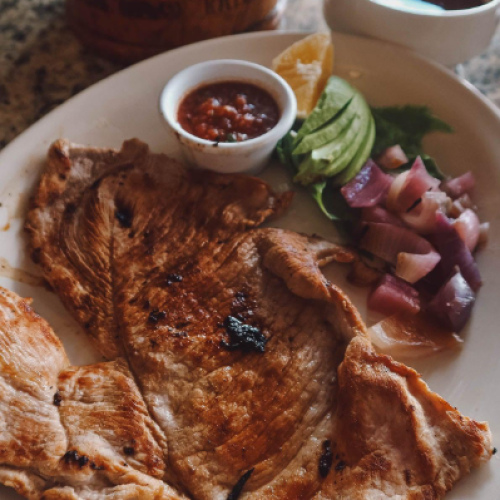
Poc Chuc
A Yucatecan grilled pork dish marinated in bitter orange and slow-cooked over open fire — smoky, slightly charred, and served with pickled red onions and habanero salsa. The definitive Yucatecan grilled meat. Best at family-run restaurants in Tulum Pueblo at $4–6 a plate. Completely different from the beach-road interpretations at 10x the price.
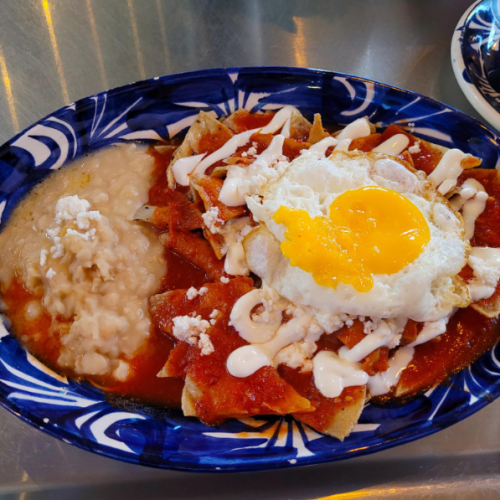
Chilaquiles
The non-negotiable Mexican breakfast — lightly fried tortilla chips simmered in green or red salsa, topped with crema, queso fresco, onion, and an egg. Every local comedor in Tulum Pueblo serves them from 7am. The best ones in Tulum are at La Nave — $4 a plate, refillable coffee included, two-minute walk from the ADO bus terminal.
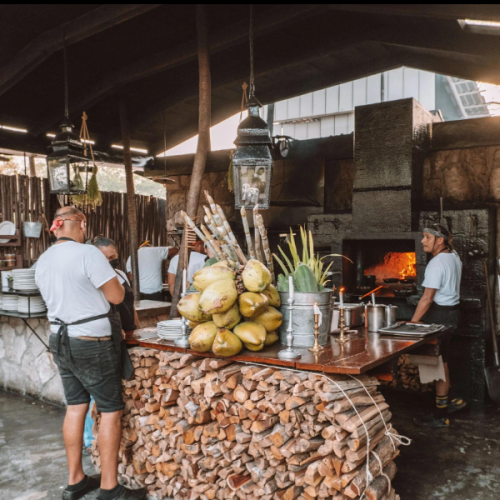
Hartwood
The restaurant that made Tulum’s food scene internationally famous — wood-fire only, no electricity, Mayan and Yucatecan ingredients, a menu that changes entirely with what the fishermen and farmers bring in that day. One of the most talked-about restaurants in Mexico. Reservations taken via email only, weeks in advance. Worth the effort. One dinner at Hartwood is worth more than seven mediocre beach-club meals.
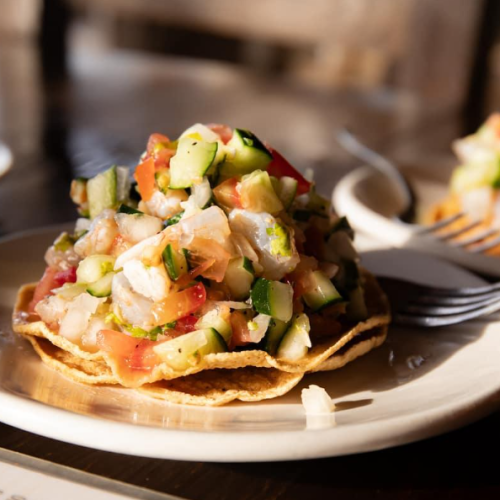
Tostadas de Ceviche
The Tulum street food staple — crispy corn tostadas loaded with fresh ceviche, aguachile negro, or octopus in lime and chilli. The best versions are at Antojitos la Chiapaneca in Tulum Pueblo, where a full plate of four tostadas costs less than $5. The same plate on the beach road costs $25. Same ocean, same fish.
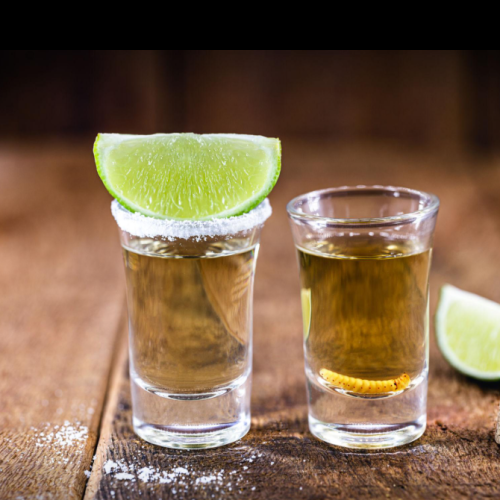
Mezcal
Tulum has one of the best mezcal scenes on the Riviera Maya — multiple dedicated mezcalerías on the beach road and in Pueblo with serious lists of small-batch agave spirits from Oaxaca, Guerrero, and beyond. Start with an espadín. Move to tobalá if the occasion calls for it. Never mix it with anything. Casa Jaguar and Batey are two of the best bars in Mexico for mezcal exploration.

Aguas Frescas & Horchata
Mexico’s most underrated drinking tradition — fresh-blended fruit waters served from giant glass barrels in markets and local restaurants. Jamaica (hibiscus), tamarindo, horchata (rice and cinnamon milk), and guanábana (soursop). Refillable cups for $0.50 from any Pueblo market stall. The best hydration in a hot climate and one of the simple pleasures of travelling in Mexico.
Getting to & Around Tulum
✈️ Flying to Tulum — Nearest Airport
Tulum does NOT have a commercial airport. The nearest major airport is Cancún International (CUN) — approximately 130km north, a 1.5 to 2 hour journey.
FROM CANCÚN AIRPORT TO TULUM:
– ADO Bus (recommended): Departs from inside the arrivals terminal. ~$10 USD. Approximately 2 hours. Runs every 1–2 hours from early morning to late evening. Most reliable and affordable option.
– Private transfer: ~$80–100 USD for up to 4 people. Pre-book online for the best rates.
– Uber: Available from Cancún airport but NOT available in Tulum — you will need a local taxi onward. Uber to the Tulum ADO bus station: ~$60–70 USD.
– Shared shuttle: ~$20–25 USD per person. Book at official transfer desks in arrivals. Slower due to multiple hotel drop-offs.
TULUM TRAIN STATION (Maya Train — Tren Maya):
The Maya Train (Tren Maya) now connects Cancún airport directly to Tulum in approximately 1.5 hours.
– Station: Cancún Airport (T4 level) → Tulum Train Station (located 3km from Tulum Pueblo)
– Cost: ~$8–12 USD
– Runs: Multiple departures daily — check current schedule at trenmayademexico.com
– From Tulum Train Station to Pueblo or beach road: taxi ~$5 USD
💡 TIP: The Maya Train is the newest and most scenic option — passing through jungle between Cancún and the Caribbean coast. A genuine transport improvement for the entire Riviera Maya.
🚗 Getting from the Airport to Tulum Directly
If travelling directly from Cancún Airport to Tulum without stopping in Cancún city:
BEST OPTIONS IN ORDER:
1. Maya Train (Tren Maya): Cancún Airport → Tulum Station ~1.5hrs | ~$8–12 USD | Multiple daily departures | Most scenic option — recommended
2. ADO Bus: Cancún Airport arrivals → Tulum ADO terminal ~2hrs | ~$10 USD | Most frequent departures
3. Private transfer: ~$80–100 USD | Pre-book at reliable transfer desks or through your hotel
4. Shared colectivo shuttle: ~$20–25 per person | Slower but cheaper than private
FROM PLAYA DEL CARMEN TO TULUM:
– ADO Bus: ~45min | ~$4 USD | Very frequent — best option
– Colectivo: ~1hr | ~$2 USD | Departs from Av. Juárez when full
FROM COBÁ TO TULUM:
– Taxi: ~45min | ~$25 USD | Only real option — no direct bus
⚠️ IMPORTANT: Tulum town (Pueblo) and the Tulum beach road are NOT the same location — they are 3–4km apart. Confirm which address you are being dropped at before your driver leaves.
🚲 Getting Around Tulum
WITHIN TULUM — THE BEST TRANSPORT OPTIONS:
Bicycle — Most Recommended for Independent Travellers
Rental: ~$5–8 USD/day from dozens of shops in Pueblo and the beach road.
The bike is the defining Tulum transport experience. Pueblo to the beach road: 10 minutes. Beach road to the ruins: 15 minutes. Gran Cenote from Pueblo: 20 minutes. Cenote Calavera: 20 minutes.
⚠️ Road condition on the beach road varies — ride cautiously at night as sections are unlit.
Taxi (Tulum-registered)
– Pueblo to beach road: ~$4–5 USD
– Pueblo to ruins: ~$4 USD
– Beach road to cenotes (Gran Cenote area): ~$5–8 USD
Tulum has its own local taxi cooperative — use the clearly marked stands in Pueblo. Agree on price before entering the cab.
Colectivos (Riviera Maya Highway 307)
Shared minivans running Highway 307 between Cancún and Tulum.
– Tulum → Playa del Carmen: ~$2 USD | ~45 min
– Tulum → Akumal: ~$1 USD | ~15 min
– Tulum → Felipe Carrillo Puerto (for Bacalar connections): ~$4 USD
Depart from Av. Tulum Sur when full. No fixed schedule — just show up.
NOTE ON UBER:
Uber does NOT operate in Tulum — use local taxis or bicycle. Uber works in Cancún, Playa del Carmen, and Mérida but not in Tulum or Bacalar due to local taxi cooperative agreements.
Visa & Entry for Mexico
Mexico is visa-free for stays up to 180 days for citizens of the United States, United Kingdom, Canada, European Union, Australia, and most other nationalities.
Tulum — Frequently Asked Questions
Is Tulum worth visiting in 2025?
Yes — but it depends on what you are looking for. Tulum rewards travellers who want nature, cenotes, boutique accommodation, and a less resort-driven experience than Cancún. It has become significantly more expensive and more crowded than it was five years ago. The ruins, the cenotes, Sian Ka'an, and the jungle hotel experience are still genuinely exceptional and unlike anything else on the Riviera Maya. If you want a full-service all-inclusive resort with a large pool complex and a big beach, Cancún or the Playa del Carmen area will serve you better.
How many days do you need in Tulum?
4 to 5 days is the minimum to do Tulum properly — ruins, at least two cenotes, a Sian Ka'an day trip, and enough time on the beach road to actually slow down. 7 days is ideal if you want to add Cobá, Akumal, and the Tulum Pueblo food scene. Many travellers combine Tulum with Playa del Carmen (1 hour north) or extend south to Bacalar — in that case, 3 days in Tulum is a good allocation within a wider Riviera Maya trip.
Is Tulum safe for tourists?
The tourist areas — the beach road, the ruins, Tulum Pueblo during daylight hours, and the cenotes — are considered safe and are visited by hundreds of thousands of tourists each year without incident. There have been isolated security incidents in less-frequented areas of Quintana Roo state. Standard travel precautions apply: use official taxis, avoid poorly lit areas at night, and check your government's current travel advisory before departure. The vast majority of visitors have a completely trouble-free experience in Tulum.
What is the best time of year to visit Tulum?
November to April is the dry season — lower humidity, comfortable temperatures around 27–30°C, and minimal rain. December to February is peak season — book accommodation well in advance and expect higher prices. May and June are hotter and more humid but noticeably less crowded, with lower accommodation rates. Hurricane season runs June to November, with the highest risk from September to October. The cenotes remain beautiful and swimmable year-round regardless of season.
Is Tulum expensive?
The beach road is expensive by Mexican standards — some of the most expensive boutique hotels and restaurants in the country are located here. Tulum Pueblo is dramatically cheaper. A breakfast in Pueblo costs $3–5, a taco costs $0.50, and a local comedor lunch costs $5–8. The cenotes range from $10–25 USD entry, and the ruins are $8 USD. The real expense in Tulum is accommodation — beach-road properties range from $100 to $800+ per night. Staying in Pueblo and biking to the beach keeps the trip very affordable.
What should I pack for Tulum?
Reef-safe sunscreen is non-negotiable — it is legally required at all cenotes and confiscated at the entrance if non-compliant. Also pack insect repellent (mosquitoes increase in the jungle areas after rain), comfortable cycling clothes for beach-road biking, a dry bag for cenote swims, solid walking sandals for the ruins, a light layer for air-conditioned restaurants and buses, and a reusable water bottle. Most beach-road hotels and restaurants are low-key — no formal dress code applies anywhere in Tulum.
Is there an airport in Tulum?
Tulum does not currently have a functioning commercial airport. The nearest major airport is Cancún International (CUN), approximately 130km north. The quickest option from Cancún Airport to Tulum is the Maya Train (Tren Maya), which connects directly to a station 3km from Tulum Pueblo in approximately 1.5 hours for around $10 USD. ADO intercity buses also depart from inside the arrivals terminal for approximately $10 USD.
Where to Go Next
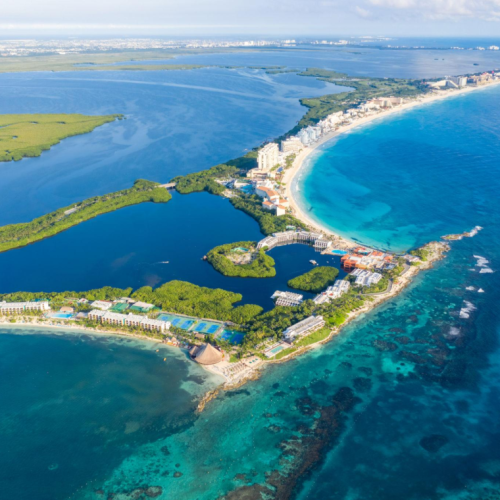
Cancún
The Riviera Maya's beating heart — legendary beaches, world-class resorts, ancient ruins inside the Hotel Zone, and the gateway to cenotes and whale shark tours. 2 hours north by ADO bus.
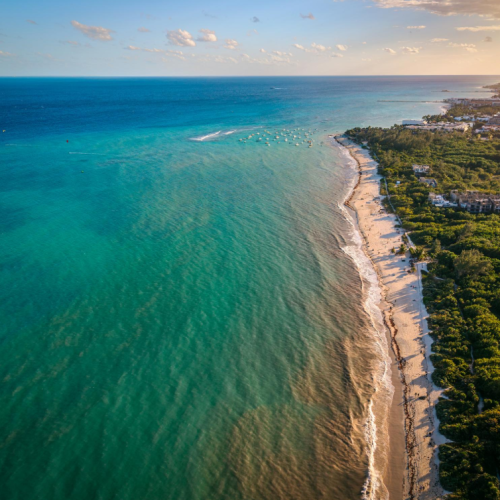
Playa del Carmen
The Riviera Maya's most vibrant and walkable town — 5th Avenue, cenote day trips, ferry to Cozumel, and the best restaurant scene between Cancún and Tulum. 1 hour south by ADO bus.
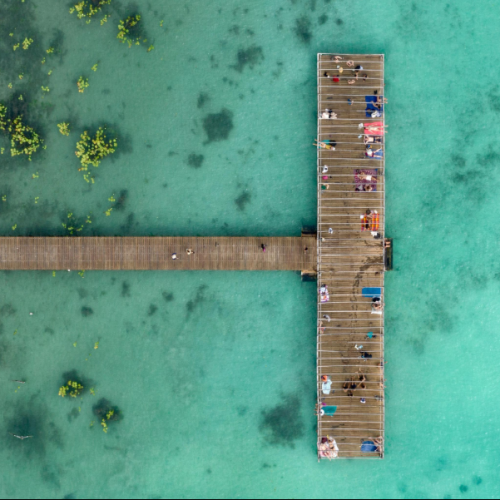
Bacalar
The Lagoon of Seven Colours — a 42km freshwater lagoon of impossibly layered blues in the jungle interior, two hours south of Tulum. The most beautiful and least known major destination on the Yucatán coast.