
QUINTANA ROO, MEXICO
Holbox Island
No cars. No stress. Pink flamingos at dusk, bioluminescent water at night, and whale sharks in the open sea. Holbox is the most peaceful and most magical island escape in Mexico — and most people drive straight past the turnoff.
Flamingos Year-Round
From Cancún: 2.5hrs
No Cars on Island
Gulf of Mexico
The Island That Slows Everything Down
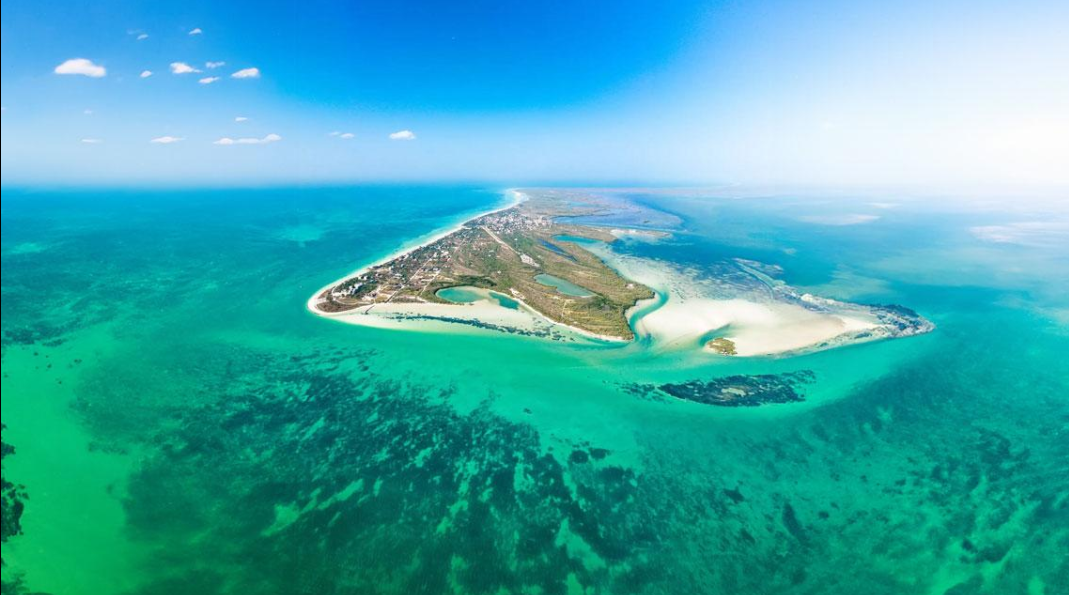
Holbox is a 42km-long sandbar island off the northern tip of the Yucatán Peninsula — separated from the mainland by a shallow lagoon, connected by a 20-minute ferry, and entirely without private cars. Golf carts and bicycles move everything and everyone. The streets are sand. The pace is something close to stopped.
This is not the Riviera Maya of beach clubs, all-inclusive resorts, and DJ sets at midnight. Holbox has no traffic lights, no chain hotels, no nightclub strip. What it has instead is a vast, shallow turquoise sea that you can walk 200 metres out into and still only be waist deep. Flamingos that wade through the lagoon at sunset in flocks of hundreds. A bioluminescence that turns the water electric blue on dark nights. And whale sharks — the world’s largest fish — feeding in the open water just north of the island from June to September.
The island has changed significantly over the past decade. The hotels are better than they used to be, the restaurants have improved dramatically, and the visitor numbers have increased. But the fundamental character of the place remains intact: no cars, no concrete towers, no resort infrastructure that tries to replicate a city experience on an island that is the opposite of a city.
Come to Holbox to decompress. Bring fewer clothes than you think you need, more sunscreen than you expect to use, and no particular agenda for the first 48 hours.
Top Things to Do in Holbox
Holbox rewards visitors who arrived expecting nothing and discovered one of the most extraordinary natural environments in the Americas — these are the experiences that define it.
Swim with Whale Sharks
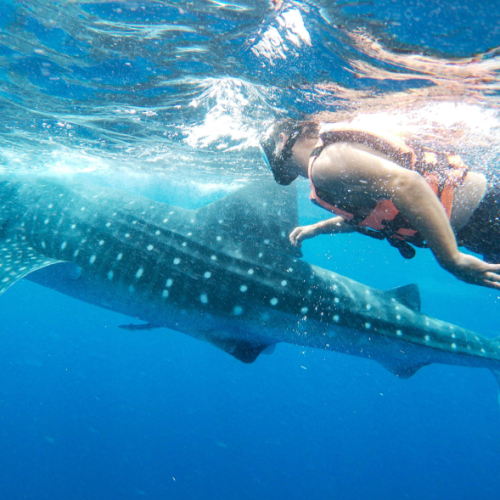
From June to mid-September, the waters north of Holbox host the largest whale shark aggregation in the world — hundreds of the planet’s largest fish feeding on plankton and small fish at the surface. Licensed tour operators run morning trips from the island — snorkelling in open water alongside animals up to 12 metres long. The experience is conducted entirely on the whale sharks’ terms: no touching, no riding, maintain distance, follow guide instructions. One of the great wildlife encounters on earth. Tours from ~$80–100 USD per person, including snorkel equipment and light lunch.
Flamingos at Punta Mosquito
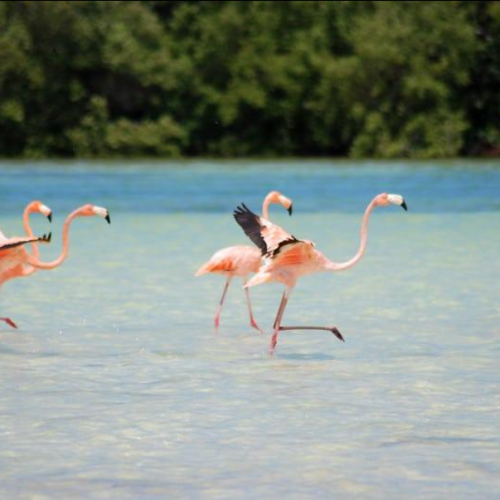
A 40-minute golf cart or bicycle ride east of town brings you to Punta Mosquito — a flat, exposed sandbar where hundreds of pink flamingos wade through the shallow lagoon in the late afternoon. The combination of flamingo pink against the turquoise lagoon water and the low evening light is one of the most photographed natural scenes in Mexico. Arrive 90 minutes before sunset for the best light. No entry fee. Bring insect repellent — the name is accurate.
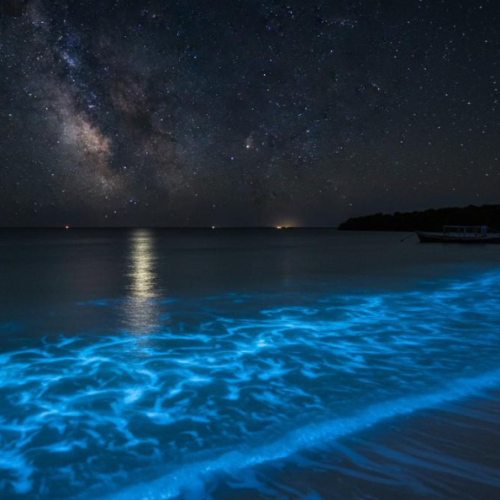
Bioluminescent Night Swim
On dark, moonless nights, the waters around Holbox produce bioluminescence — single-celled marine plankton that emit blue-green light when disturbed. Swimming through a bioluminescent sea at night, with every stroke of your arm and kick of your legs leaving a trail of living light, is genuinely otherworldly. It is one of the most memorable experiences in Mexico. Best from June to October when the plankton population peaks. Tours available: ~$25–40 USD. Or wade in from the public beach on a moonless night for free.
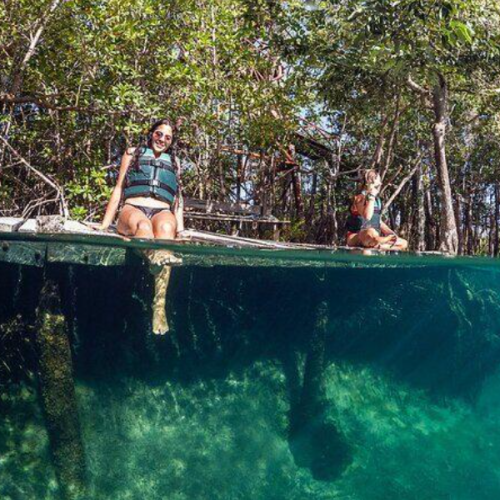
Float in the Yalahao Lagoon
The channel between Holbox and the mainland is a shallow, gin-clear lagoon used by boat tour operators for a mid-trip stop — you enter via a floating platform and drift in water so warm and so clear it feels artificial. Included in most whale shark and island tours. Also accessible independently by kayak rental from town (~$10/half day). The lagoon side of Holbox has a completely different character to the open Gulf coast — calmer, warmer, and a shade of green-blue that doesn’t appear in the same water anywhere else.
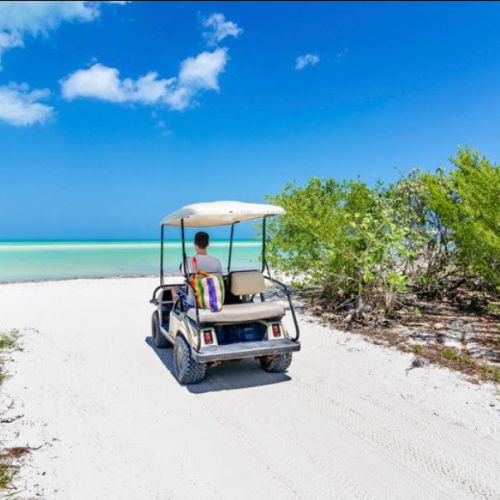
Rent a Golf Cart — Explore the Island
The island’s one motorised transport option — rent a golf cart ($30–40/day) from any of the rental shops on the main square and spend a half-day exploring the full length of the island. East toward Punta Mosquito and the flamingo flats. West toward Punta Cocos for the best hammocks-in-the-sea photos in Mexico. North along the beach road for deserted stretches where you will have the Caribbean to yourself. The golf cart circuit of Holbox is one of the most enjoyable half-days on the Riviera Maya.
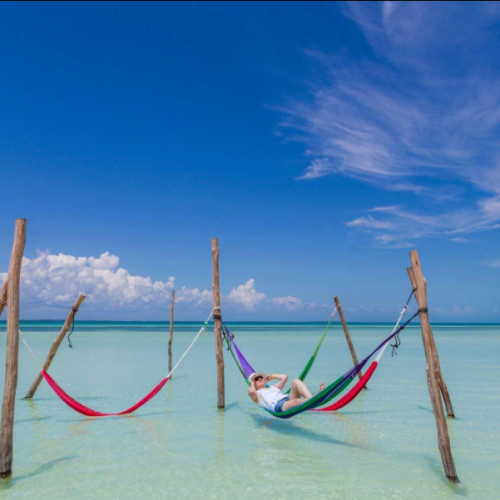
Punta Cocos — Hammocks in the Sea
The most photographed spot on Holbox — a sandbar on the western tip of the island where the sea is so shallow that hammocks have been strung between wooden posts directly in the water. Swim out, climb in, and let the warm Gulf water wash around you. Best at mid-morning before the tour groups arrive. Accessible by golf cart (30 minutes from town), bicycle (1 hour), or as part of an island tour. The image on every Holbox Instagram account originates here.
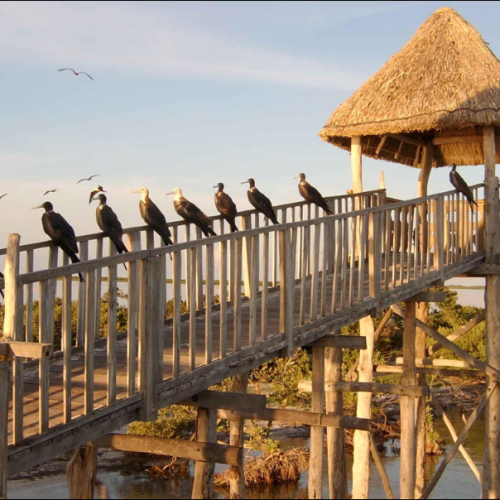
Isla Pájaros — Bird Island
A protected bird sanctuary in the middle of the lagoon between Holbox and the mainland — a small mangrove island hosting one of the largest roseate spoonbill and frigatebird colonies in the Yucatán. Boat tours from Holbox town depart in the morning: ~$20–30 USD. The combination of hundreds of spoonbills, frigatebirds, and the occasional crocodile in a single mangrove island is extraordinary for birders and non-birders alike.
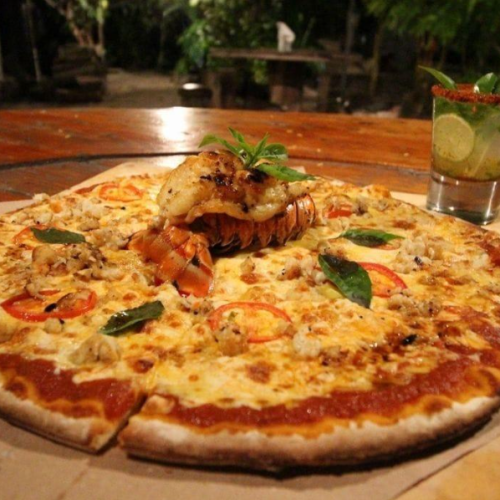
Eat Lobster Pizza on the Square
Holbox’s most famous and most unexpected culinary tradition — wood-fired pizza topped with fresh local lobster, served from outdoor restaurants on and around the main square (Parque Central). The combination sounds improbable. It has been a Holbox signature dish for decades, born from the island’s once-thriving lobster industry. El Chapulín and Pizzeria Edelyn are the two most established names. One pizza ~$15–25 USD. A cold beer, a table on the square, and a lobster pizza at dusk is the definitive Holbox evening.
Holbox's Best Beaches & Natural Spots
Holbox faces the Gulf of Mexico on one side and a shallow, protected lagoon on the other — giving the island two completely different water personalities, plus a collection of natural spots that exist nowhere else on the Riviera Maya.
Playa Holbox — The Main Beach
The wide, North-facing beach running the full length of the island's Gulf coast — shallow, calm, warm, and backed by nothing but jungle and simple beach bars. Walk in either direction for 10 minutes and you will have it entirely to yourself.
Punta Cocos — Most Iconic Spot
The western sandbar where hammocks hang in waist-deep sea — the most photographed location on the island and the most peaceful place to spend a mid-morning. Accessible by golf cart (30 min), bicycle (1 hr), or as part of an island tour.
Punta Mosquito — Best at Sunset
The flat eastern sandbar where hundreds of flamingos wade through the lagoon shallows in the late afternoon. The finest natural light on Holbox. Arrive 90 minutes before sunset. Bring insect repellent — the name is not a suggestion.
Bioluminescent Beach — Best at Night
On moonless nights from June to October, the waters around Holbox produce natural bioluminescence — living light in every wave and every stroke. Wade in from the public beach on any dark night for the most extraordinary free swim in Mexico.
Yalahao Lagoon — The Other Side
The sheltered lagoon between Holbox and the mainland — glassy, warm, impossibly green-blue, and a completely different experience from the open Gulf coast. Best explored by kayak (~$10/half day) or as a stop on an island boat tour.
Where to Stay in Holbox
Holbox has no international hotel chains — and never will, thanks to its protected natural area designation. What it has instead is a growing collection of independent boutique hotels, wooden cabana properties, and barefoot-luxury beach lodges that are entirely specific to this island.
BUDGET ACCOMMODATION IN HOLBOX
Hostel Tribu — Town Centre
The most social and best-reviewed hostel on Holbox — a well-run property with a rooftop terrace, hammock lounge, and a genuinely communal atmosphere that makes solo travel on Holbox very easy. Walking distance to the main square, the beach, and every tour operator on the island.
Dorm from ~$18/night | Private room from ~$55/night.
Hotel Faro Viejo — Town Centre
A simple, well-maintained budget hotel one block from the main square — basic rooms with good AC, a small courtyard, and a price point that is very rare for Holbox in any season. Good for travellers who want a private room at a hostel price.
From ~$55/night.
Ida y Vuelta Hostel — Town Centre
A newer, well-reviewed hostel with a clean, minimalist design and a social rooftop area. Good for solo travellers and couples on a budget who want to be within walking distance of everything the island has to offer.
Dorm from ~$20/night | Private from ~$60/night.
💡 BUDGET STRATEGY:
Holbox is one of the priciest destinations per night on the Riviera Maya relative to what you get — the island’s protected status limits construction, which limits supply. Budget accommodation fills up weeks in advance in high season (December–April). Book as early as possible — last-minute budget availability on Holbox is genuinely rare. The extra planning effort is worth it.
MID-RANGE ACCOMMODATION IN HOLBOX
Villas Flamingos — Beachfront
One of the most well-established mid-range properties on the island — wooden bungalows directly on the beach, a hammock-strung garden facing the Gulf, and a pace of life that embodies everything Holbox is supposed to be. Consistently excellent reviews across a decade of operation.
From ~$120/night.
Hotel B — Town Centre
A design-forward boutique property in the heart of town — a rooftop pool, contemporary rooms that do not sacrifice character for comfort, and a walkability to the square and beach that makes it one of the most practical mid-range options on the island.
From ~$130/night.
Xaloc Resort — Beachfront
A reliable, well-run beachfront resort with a large pool area, direct beach access, and a family-friendly atmosphere. One of the few properties on Holbox that has a proper full resort feel without the resort footprint or price tag of the mainland all-inclusives.
From ~$150/night.
Casa Las Tortugas — Beachfront
A charming boutique beachfront hotel with individual casita-style rooms, a beautiful common garden, and a calm, adults-favoured atmosphere. Consistently one of the most recommended mid-range hotels on the island by repeat visitors.
From ~$140/night.
💡 MID-RANGE TIP:
On Holbox, beachfront position means everything. The island is narrow enough that the difference between a beachfront room and a garden room is 2 minutes of walking — but the experience of waking up to the Gulf directly outside your room is genuinely different from a garden-view option at the same property. At the mid-range tier, the beachfront premium is usually small enough to justify.
LUXURY ACCOMMODATION IN HOLBOX
Casa Takywara — Beachfront
Holbox’s finest boutique luxury property — a small collection of individually designed suites directly on the beach, a private rooftop terrace, exceptional personalised service, and an aesthetic that is the most beautifully resolved version of the Holbox barefoot-luxury style. Not flashy. Quietly extraordinary.
From ~$450/night.
Ser Casasandra — Beachfront
A long-established luxury property that helped define what Holbox boutique luxury means — an art-forward hotel with individually curated rooms, a beachfront restaurant with one of the best wine programs on the island, and an atmosphere that attracts a quiet, discerning international crowd.
From ~$380/night.
Nomade Holbox — Beachfront
The sister property of Nomade Tulum — the same wellness-oriented philosophy, palapa architecture, and barefoot-luxury sensibility applied to the Holbox context. Morning yoga on the beach, a temazcal, a beachfront bar, and an atmosphere that is distinctly its own.
From ~$420/night.
💡 LUXURY TIP:
Holbox luxury is not conventional luxury — there is no room service, no formal dress code, no concierge in the traditional sense. The luxury is in the location, the design, the quality of materials, and the service philosophy. If you need the infrastructure of a full-service resort, Cancún’s Nizuc or Playa del Carmen’s Mayakoba are better choices. If you want the best version of a place that exists nowhere else, Holbox’s top tier delivers.
What to Eat & Drink in Holbox
Holbox’s food scene is built almost entirely around what the sea provides. The island was a fishing community long before it was a tourist destination — and the seafood that arrives daily from the Gulf of Mexico is the best argument for staying at least one extra night. The restaurants are almost all on or near the main square and the two or three streets connecting it to the beach. There are no bad views and very little bad food, as long as you order what the island actually does rather than what the tourist menus inflate.
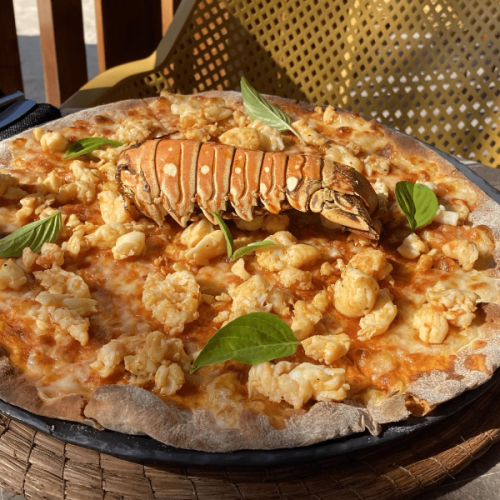
Lobster Pizza
The dish that defines Holbox — wood-fired pizza topped with freshly caught local lobster. Born from the island’s fishing heritage when lobster was cheap and abundant, now a proper culinary tradition. El Chapulín and Pizzeria Edelyn on the main square are the two most established options. One pizza serves two people at ~$15–25 USD. Order it with a cold Modelo and eat outside on the square as the sun goes down. Non-negotiable.
Fish Tacos
The essential Holbox street food — freshly grilled or battered fish in corn tortillas, topped with cabbage, crema, pico de gallo, and a squeeze of lime. The best versions are from the simple taco stands near the main square and the fishing dock in the early morning. Each taco ~$1–2 USD. The fish that arrived on the boats an hour ago is now in your taco. That supply chain is as short as it gets.

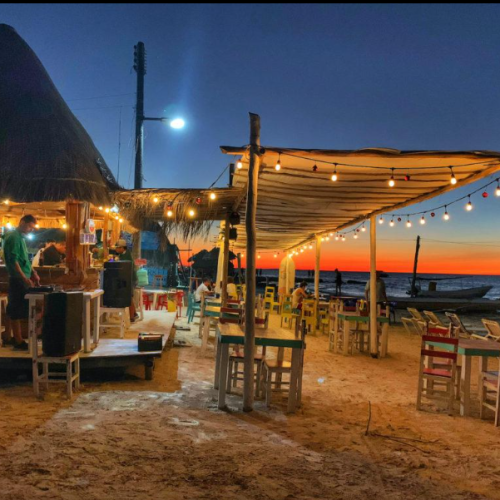
Sunset Drinks
Holbox has no rooftop bars or beach club sound systems competing for sunset dominance. What it has instead is simple beach bars facing west — plastic chairs in the sand, a cooler of beer, a few cocktails, and a Gulf of Mexico sunset that turns the sky orange and the water pink. El Coche Rojo and Roots Bar near the beach are two of the most reliable. Bring cash. Arrive before the colour starts
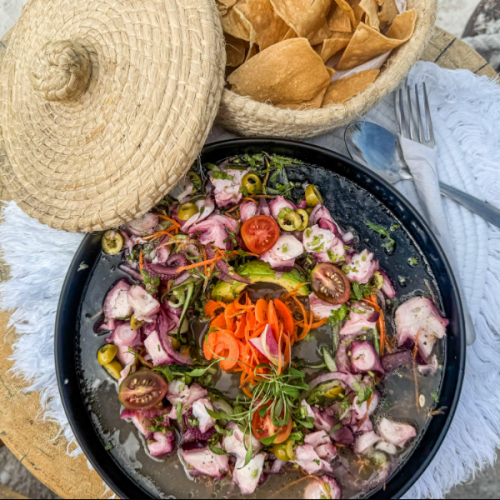
Fresh Ceviche & Seafood
The daily catch from the Gulf of Mexico — shrimp, grouper, snapper, octopus, and lobster — served raw-cured in lime as ceviche, grilled whole, or in tacos. The freshest seafood on the entire Riviera Maya reaches Holbox first. Los Pelícanos on the beach is one of the most reliably excellent seafood restaurants on the island. Order whatever was caught that morning — the waiter will tell you if you ask.
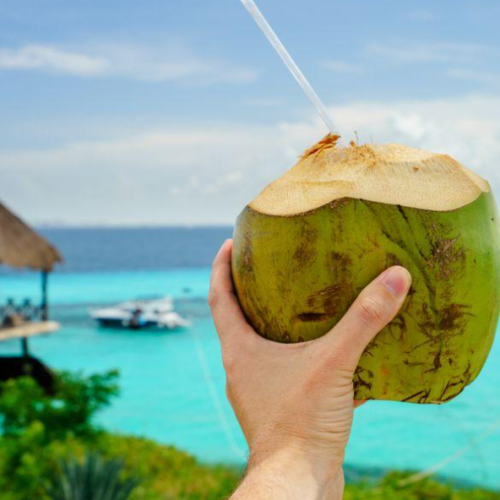
Agua de Coco
Fresh coconut water served directly from the coconut — available from street vendors throughout the island for $1–2 USD. In 35°C Gulf of Mexico heat, it is the single most effective hydration strategy available. The vendors near the main square and the beach will open the coconut, insert a straw, and hand it to you in under 30 seconds. Order a second one before you finish the first.
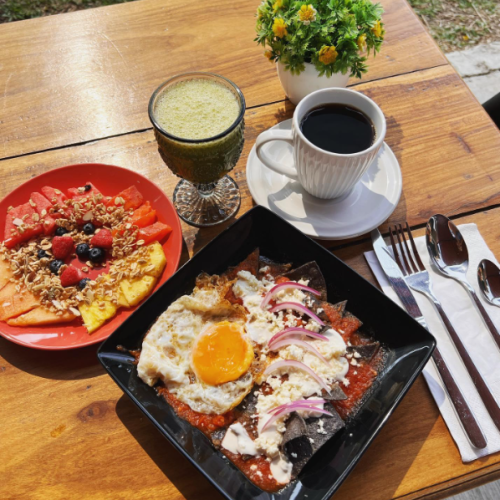
Local Breakfast
The island’s local comedores open early — huevos a la mexicana, fresh fruit plates, chilaquiles, and coffee for $3–5. The best ones are off the main square on the sand streets heading inland. Look for the hand-painted signs and the plastic chairs already occupied by fishermen at 7am. The most honest $4 breakfast on the Riviera Maya and the best way to start a day that has no particular schedule.
Getting to & Around Holbox
✈️ Flying to Holbox — Nearest Airport & Route
Holbox does NOT have an airport. The nearest major airport is Cancún International (CUN) — approximately 140km southeast, a 2.5 to 3 hour journey combining bus and ferry.
THE COMPLETE JOURNEY FROM CANCÚN AIRPORT TO HOLBOX:
STEP 1 — CANCÚN AIRPORT TO CHIQUILÁ (FERRY PORT):
– ADO Bus from terminal: The most reliable option — direct bus from Cancún Airport arrivals to Chiquilá ferry port. Approximately 2 hours. ~$6–8 USD. Check current ADO schedule at ado.com.mx as departure times vary seasonally.
– Alternative via Cancún City: Take ADO bus to Cancún ADO terminal downtown (~$1), then a separate ADO bus from downtown to Chiquilá (~$5). Slower but more flexible departure times.
– Private transfer Cancún Airport → Chiquilá: ~$80–100 USD for up to 4 people.
STEP 2 — CHIQUILÁ FERRY TO HOLBOX:
– Ferry crossing: 20–25 minutes | ~$4 USD each way
– Ultramar ferries depart every 30–60 minutes from approximately 6am to 8pm
– Last ferry back to Chiquilá: approximately 8pm — do NOT miss this if you have an early morning flight from Cancún
TOTAL JOURNEY TIME: Approximately 2.5 to 3 hours from Cancún Airport.
TOTAL COST (budget option): Approximately $11–13 USD one way.
💡 TIP: Leave the car at the mainland. There are secure paid parking areas in Chiquilá ($5–8 USD/day) — do not attempt to take a rental car to Holbox. Private cars are not permitted on the island. Park at the ferry port and bring only what you can carry.
⛴️ Chiquilá Ferry — Everything You Need to Know
THE CHIQUILÁ FERRY IS THE ONLY WAY ON AND OFF THE ISLAND.
OPERATOR: Ultramar (most common and most reliable)
CROSSING TIME: 20–25 minutes
COST: ~$4 USD each way (~$8 USD return)
FREQUENCY: Every 30–60 minutes, approximately 6am to 8pm
LAST FERRY TO HOLBOX: Approximately 8pm (verify current schedule on arrival at Chiquilá)
LAST FERRY FROM HOLBOX: Approximately 8pm
WHAT TO KNOW BEFORE BOARDING:
– Pay cash at the ticket window at the Chiquilá dock. Pesos preferred.
– Golf carts and bicycles can be shipped across on the cargo ferry — not the passenger ferry
– Luggage goes in the hull — keep valuables with you in the passenger cabin
– The crossing takes 20 minutes in calm conditions — longer in rough weather (December–February can have rough passages)
– Chiquilá has secure paid parking ($5–8 USD/day) — use it, don’t leave a car on the roadside
FROM PLAYA DEL CARMEN TO HOLBOX:
– ADO Bus: Playa del Carmen → Cancún (~1hr) → Chiquilá (~2hrs). Total ~3hrs + ferry.
– Or direct bus from Playa del Carmen ADO terminal to Chiquilá on select departures — check ado.com.mx
FROM TULUM TO HOLBOX:
– ADO Bus: Tulum → Cancún (~2hrs) → Chiquilá (~2hrs). Total ~4hrs + ferry.
– Private transfer Tulum → Chiquilá: ~$120 USD
🛺 Getting Around Holbox Island
THERE ARE NO PRIVATE CARS ON HOLBOX.
Movement on the island is by golf cart, bicycle, or foot. This is not an inconvenience — it is the defining character of the island.
GOLF CART RENTAL — Most Versatile
Cost: ~$30–40 USD/day from rental shops near the ferry dock and main square
Range: The island is approximately 42km long but most tourist activity is concentrated in the western 5km. A golf cart comfortably covers all key spots — Punta Cocos (30 min west), Punta Mosquito (40 min east), and the beach stretches between them.
Important: Agree on price and condition before signing. Check that the cart has adequate charge for the route you plan.
BICYCLE RENTAL — Best for Short Trips
Cost: ~$5–8 USD/day
Suitable for: Town to beach, town to Punta Mosquito (40 min cycling), casual beach exploration
Not suitable for: Punta Cocos (1 hour+ cycling in heat) in high season
ON FOOT — Town is Walkable
The town centre of Holbox — main square, beach, restaurants, tour operators — is entirely walkable. Sand streets, no traffic, no rush. The ferry dock to the main square is a 10-minute walk.
COLLECTIVO GOLF CARTS
Shared golf cart taxis operate set routes on the island — ask at the ferry dock for the collectivo going to your hotel. Cost: ~$1–2 USD per person per trip.
⚠️ NOTE ON TIMING:
The last ferry from Holbox to Chiquilá runs at approximately 8pm. If you have an early morning flight from Cancún, consider staying your final night in Cancún or Playa del Carmen rather than attempting the Holbox → Chiquilá → Cancún journey on the morning of your flight.
Visa & Entry for Mexico
Mexico is visa-free for stays up to 180 days for citizens of the United States, United Kingdom, Canada, European Union, Australia, and most other nationalities.
Holbox — Frequently Asked Questions
Is Holbox worth visiting?
Yes — but only if you understand what Holbox is and is not. It is not a party destination, not a beach club scene, not an all-inclusive resort island. It is a car-free, pace-of-life-reset destination with extraordinary wildlife experiences (whale sharks, flamingos, bioluminescence), genuinely beautiful shallow sea, and a simplicity that most Caribbean destinations have long since abandoned. Travellers who arrive expecting Cancún-style amenities are disappointed. Travellers who arrive expecting exactly what it is — a quiet, beautiful island with a sand-street town and no agenda — are the ones who book return flights before they leave.
How many days do you need in Holbox?
2 to 3 days is enough to cover the main experiences — whale sharks or flamingos (depending on season), Punta Cocos, a bioluminescence swim, and the lobster pizza ritual. 4 to 5 days allows genuine decompression — the reason most people who love Holbox stay longer than planned. The island rewards slow travel. Arriving with a packed itinerary is the wrong approach. Arrive with a loose list of things you want to see and let the island fill the rest.
Is Holbox safe?
Holbox is considered one of the safest destinations in Mexico for tourists. The island is small, community-oriented, and has no significant crime issues in the tourist areas. Standard travel common sense applies — keep valuables secured, do not leave belongings unattended on the beach, and use licensed tour operators for whale shark and water tours. The main practical safety consideration is the medical infrastructure — facilities on the island are very limited. Ensure your travel insurance covers medical evacuation to Cancún before you arrive.
What is the best time to visit Holbox?
December to April is the dry season — the most reliable weather, calmest seas, and best visibility for snorkelling. June to September brings whale shark season — the primary reason many people visit — but also higher humidity and a greater chance of afternoon rain. The bioluminescence is strongest from June to October when plankton populations peak. November and May are shoulder months — fewer crowds, lower prices, good weather. Avoid September and October if possible — peak hurricane season and the roughest ferry crossings of the year.
Is Holbox expensive?
More expensive than most of the Riviera Maya at the hotel level — the island's protected status limits accommodation supply, which keeps prices high relative to quality. Food and activities are reasonably priced: a lobster pizza for two is $20–25, a whale shark tour is $80–100, a golf cart for the day is $35. The expense is almost entirely in the accommodation. Budget travellers can make it work by booking early, choosing Hostel Tribu or similar, and keeping restaurant choices local. Mid-range and luxury travellers will find the prices entirely reasonable for what the island delivers.
Is Holbox good for families with children?
Yes — particularly for families with children over 5. The shallow, warm, calm Gulf of Mexico is ideal for children who are not strong swimmers. The golf cart culture is fun for kids. The flamingos, whale sharks (June–September, minimum age varies by operator — typically 8+), and bioluminescence are extraordinary experiences for young travellers. The lack of cars eliminates road safety concerns. The main limitation is the accommodation — very few properties have the resort infrastructure (kids' clubs, multiple pools, organised activities) that large beach resorts provide. Holbox is a nature and exploration holiday rather than a structured resort holiday.
Does Holbox have ATMs and reliable WiFi?
There are ATMs on the island but supply runs out in high season — bring sufficient cash from Cancún or Playa del Carmen as a contingency. Most hotels, restaurants, and tour operators accept card payments, but cash is preferred and sometimes the only option at smaller establishments. WiFi is available at most hotels and restaurants but speeds are limited — Holbox is not the destination for remote work requiring reliable high-speed internet. Mobile signal exists on the island but can be patchy outside the town centre.
Where to Go Next
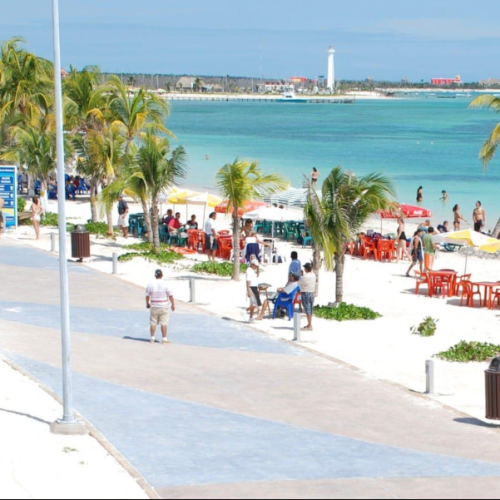
🪸 Mahahual
A tiny Caribbean fishing village on the Costa Maya — pristine reef just offshore, an unhurried malecón lined with beach bars, and none of the tourist infrastructure that has transformed the northern Riviera Maya. The most untouched stretch of Caribbean coast in Mexico. 5 hours south via bus.
🐠 Puerto Morelos
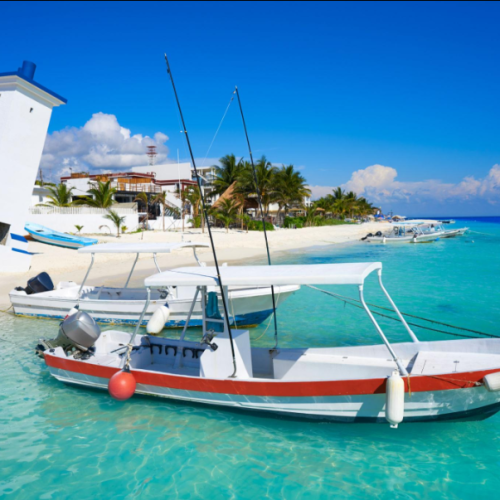
The quietest town between Cancún and Playa del Carmen — a fishing village with a leaning lighthouse, a world-class coral reef just 500 metres offshore, and a pace of life that the rest of the Riviera Maya abandoned a decade ago. 2.5 hours south via bus and ferry.
Bacalar
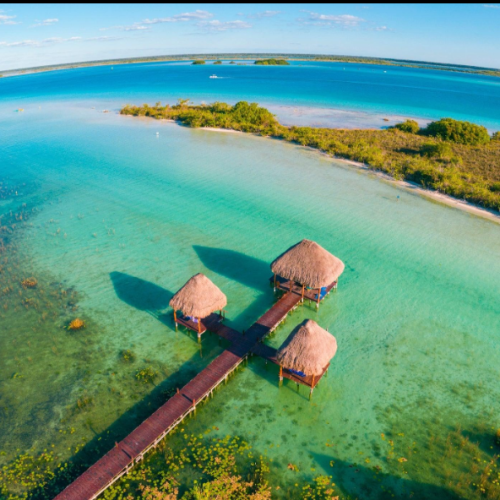
The Lagoon of Seven Colours — a 42km freshwater lagoon of impossibly layered blues in the jungle interior, two hours south of Tulum. The most beautiful and least known major destination on the Yucatán coast.