
TRAVEL GUIDES — TULUM
Tulum Beach Clubs — The Reality vs What Instagram Shows You
The most photographed beach road in Mexico is also one of the most misunderstood. Here is what a day at a Tulum beach club actually costs, actually feels like, and actually delivers — before you book a daybed based on someone else’s highlight reel.
The Most Photographed Beach in Mexico Has a Pricing Problem
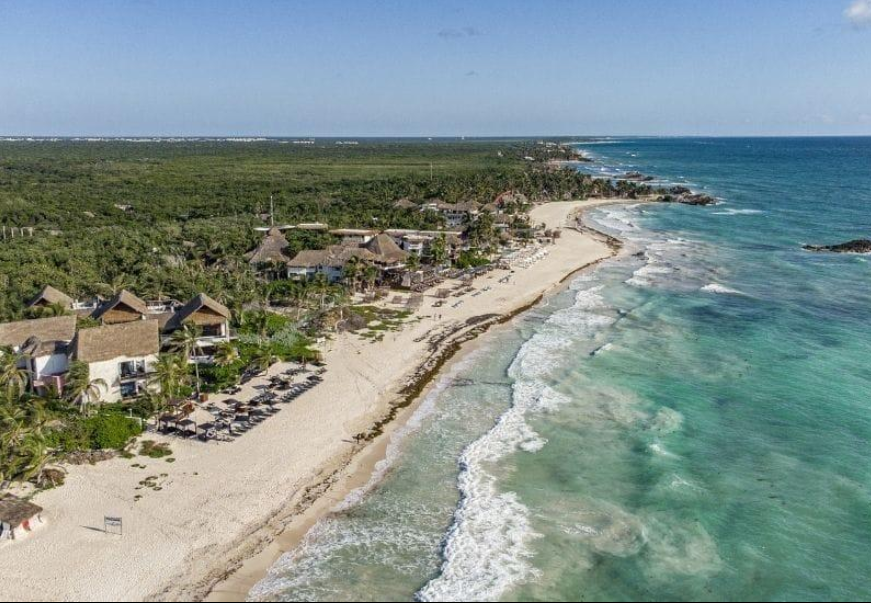
The Tulum beach road is genuinely one of the most beautiful stretches of coastline in Mexico — a 10-kilometre arc of white sand, turquoise Caribbean water, and jungle-backed palapa architecture that photographs better than almost anywhere else in the hemisphere. This is not marketing. The setting is real. The light at 7am on an empty stretch of the Tulum beach is one of those travel moments that actually lives up to what you imagined it would be.
What Instagram does not show you is the $50 minimum spend to access it. Or the $18 cocktail that counts toward it. Or the electronic music that starts at noon and plays at conversation-ending volume until 10pm. Or the fact that the most iconic shots of empty white daybeds and untouched water were taken at 6am before the beach club opened, by a content creator who negotiated free access in exchange for the post you just saved to your travel folder.
This guide is not written to tell you Tulum beach clubs are bad — several of them are genuinely excellent and worth every peso. It is written to close the gap between what the algorithm serves you and what you will actually experience when you arrive. The beach is still there. The water is still that colour. The reality is just more complicated, more expensive, and more interesting than the photos suggest — and knowing the difference in advance makes the whole thing significantly better.
Tulum Beach Clubs — What Instagram Shows vs What You Get
The same destination. Two completely different framings. Both technically true.
WHAT INSTAGRAM SHOWS YOU
The setting: An empty white daybed facing turquoise water with no one else visible in the frame, photographed at golden hour with a $22 mezcal cocktail artfully placed in the foreground
The crowd: Beautiful, tanned, international — a curated cross-section of people who look like they do this every weekend
The music: Ambient, melodic, deep house — the kind of thing that sounds like it was selected by someone with exceptional taste
The food: A tuna tostada arriving on a slate plate, garnished with microgreens, placed in front of someone who is not about to eat it
The vibe: Effortless, exclusive, undiscovered — the sensation of being somewhere before everyone else finds it
The price: Never mentioned
The timing: Shot between 6am and 8am before anyone else arrived, or digitally edited to remove the 200 other guests visible in the original
The version of Tulum: The one that existed between approximately 2015 and 2019, which was genuinely quieter, genuinely more exclusive, and genuinely less crowded than the version that exists today
WHAT YOU ACTUALLY GET
The setting: A beautiful beachfront with white sand and genuinely turquoise water — this part is real and does not require editing. The beach is as good as it looks. The daybed is also real, and comfortable.
The crowd: 200 to 600 other guests depending on the venue and the day — international, well-dressed, and primarily focused on getting their own version of the Instagram photo
The music: Electronic music at 90+ decibels starting around noon, continuing through sunset, making normal conversation at your daybed genuinely difficult after 1pm
The food: Good to excellent at the better venues — genuinely some of the best beach club food in Mexico. Also genuinely expensive. The tuna tostada is $18.
The vibe: A managed hospitality experience at a premium price point — professional, efficiently staffed, and designed primarily around high F&B turnover per daybed
The price: $50–150 USD minimum spend per person at entry level venues. $150–400 at premium venues. This is the cover charge plus the minimum you must spend on food and drink to keep your spot.
The timing: Arrive after 11am and the best daybeds are gone. Arrive at 9am and the setting is extraordinary. The Tulum beach road at 9am on a Tuesday is a different and genuinely better experience than the same location at 3pm on a Saturday.
The honest version of Tulum: Still beautiful. More developed than the photos suggest. Worth doing once with clear eyes and a realistic budget. Better than you expect at 9am. Louder than you expect at 2pm.
What a Tulum Beach Club Actually Is
Understanding what you are buying makes the experience better. A Tulum beach club is not a public beach with amenities — it is a private hospitality concession operating on beachfront land granted to a private operator under a federal coastal zone permit. The beach itself (the strip of sand below the high tide line) is legally public in Mexico under federal law. The sunbeds, the palapas, the pools, the restaurant, the sound system, and the staff are not.
This means that accessing the beach experience you see in the photos requires purchasing entry to the venue — either as a cover charge, a daybed reservation with minimum spend, or a restaurant reservation that includes beach access. There is no version of the Tulum beach road experience that is free, and there has not been for several years. The travellers who found it free were there before the beach clubs opened, before the road was paved, before the international attention arrived, and they remember it with the particular fondness of people who experienced something before it became expensive.
The beach clubs on the Tulum road operate across roughly 10 kilometres, from the Tulum ruins at the northern end to the Boca Paila junction at the south. The northern third — closest to the ruins — is the most concentrated and most photographed section. The southern section is quieter, newer in some cases, and increasingly where the better-value and more interesting venues are opening. The road itself is a destination — unpaved in sections, driven at 20km/h past jungle on one side and ocean on the other, best experienced on a bicycle or a slow-moving golf cart rather than an Uber.
What makes the Tulum beach road genuinely worth experiencing — even at the prices and even with the crowds — is the combination of the setting, the architecture, and the water. The palapa and jungle aesthetic of the best venues is not replicated anywhere else in Mexico. The Caribbean water at this latitude, on a windless morning, is one of the clearest and most turquoise bodies of water on the planet. The beach clubs did not create those things. They just found a way to charge for access to them. Understanding that distinction is what allows you to enjoy the parts that are genuinely exceptional without feeling cheated by the parts that are a product.
What You Will Actually Pay — The Full Cost Breakdown
The price of a Tulum beach club day is never one number — it is a series of numbers that compound. Here is the complete picture.
THE ENTRY COST
DAYBED RESERVATION WITH MINIMUM SPEND
The standard entry model at most Tulum beach clubs. You reserve a daybed (or a table, or a sunbed) and commit to a minimum food and drink spend that is deducted from your bill. The daybed itself may or may not have an additional rental fee on top.
Entry-level venues: $50–80 USD minimum spend per person
Mid-tier venues: $100–150 USD minimum spend per person
Premium venues (Bagatelle, Vagalume, Ahau): $150–250 USD minimum per person
Top tier (Rosa Negra, Papaya Playa Project premium section): $300–400 USD minimum per person for prime daybed positions
IMPORTANT: This minimum spend is a consumption minimum — you must spend this amount on food and drinks. It is not an entry fee that you pay and then spend separately. If you spend less than the minimum, you pay the difference on departure.
COVER CHARGE MODEL
Some venues charge a flat cover rather than a consumption minimum — entry is $30–60 USD per person and you then pay individually for food and drinks on top of that. This model is less common now but still used at some venues for walk-in guests without reservations.
RESTAURANT RESERVATION
Several beach clubs allow access via a lunch reservation rather than a daybed minimum — you book a table, order a meal, and beach access is included. This is often the most cost-effective way to experience the setting if a full-day daybed is not the goal. Minimum order per person typically $40–60 USD.
WHAT BOOKING IN ADVANCE SAVES YOU
Walk-in pricing at Tulum beach clubs is consistently higher than pre-booked pricing. Reserve online 3–7 days in advance for the best rates and guaranteed daybed placement. Peak season (December–April) and holiday weekends book out 2–3 weeks ahead.
THE ONGOING COST ONCE YOU ARE INSIDE
FOOD & DRINK PRICING (CURRENT AVERAGES)
These are the prices that consume your minimum spend — and the items you will order to make up the difference if you underestimate.
Cocktails: $15–25 USD each
Artisanal mezcal (by the glass): $18–35 USD
Beer (Modelo, local craft): $8–12 USD
Agua fresca or non-alcoholic: $8–12 USD
Ceviche or seafood appetiser: $18–28 USD
Tuna tostada (the standard beach club order): $16–22 USD
Main course (fish, grilled protein): $28–45 USD
Sharing platter (for 2): $45–80 USD
A REALISTIC DAY FOR TWO PEOPLE:
2 daybed reservations at $100 USD minimum each: $200 USD
2 rounds of cocktails × 2 people: $60–100 USD
Lunch (shared appetiser + 2 mains): $70–100 USD
Afternoon drinks (2 more cocktails each): $60–100 USD
TOTAL FOR TWO: $390–500 USD for a single beach club day
This is not an extreme scenario — it is an average day at a mid-tier venue for two people who eat and drink at a normal pace.
THE BUDGET-CONSCIOUS APPROACH:
Reserve the cheapest available daybed category. Order the minimum required to meet your spend. Eat before you arrive (a proper breakfast in Tulum town costs $6–10 USD). Drink at your own pace rather than ordering because the waiter reappears every 20 minutes.
Minimum realistic day for one person: $60–80 USD (entry-level venue, one cocktail, one appetiser)
Average realistic day for one person: $120–180 USD (mid-tier venue, 2–3 drinks, light lunch)
WHAT IS NOT INCLUDED IN ANY OF THE ABOVE:
Transport to the beach road: $8–15 USD Uber each way from Tulum town
Sunscreen (buy before you go — beach road prices are double town prices)
Tips: 10–15% on all F&B
Bicycle or golf cart rental if you want to explore beyond your venue: $15–30 USD
The Six Types of Tulum Beach Club Experience
Not all Tulum beach clubs are the same — the road has everything from serious restaurant-anchored venues to low-key open-air palapas. Understanding the tier before you book saves both money and expectations.
The Festival Venue
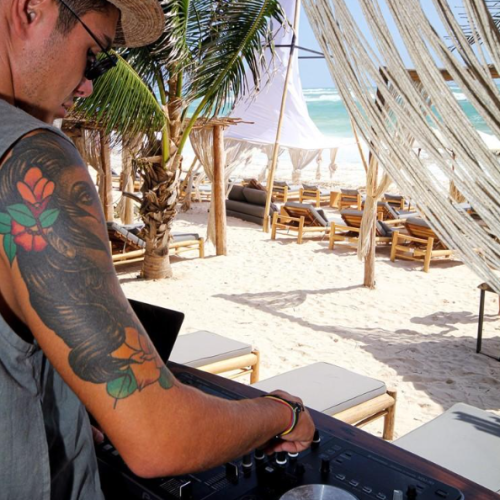
Full electronic music program from noon, headline DJs on weekends, production lighting visible from the road, 400+ guests at peak. The experience is a dayclub event on a beautiful beach — loud, social, and genuinely fun if that is what you came for. Examples: Papaya Playa Project (PPP), Mia Beach Club. Best for: groups, solo travellers who want energy and crowd, people who enjoy festival environments. Wrong for: couples wanting conversation, families, anyone who values quiet.
The Boutique Retreat
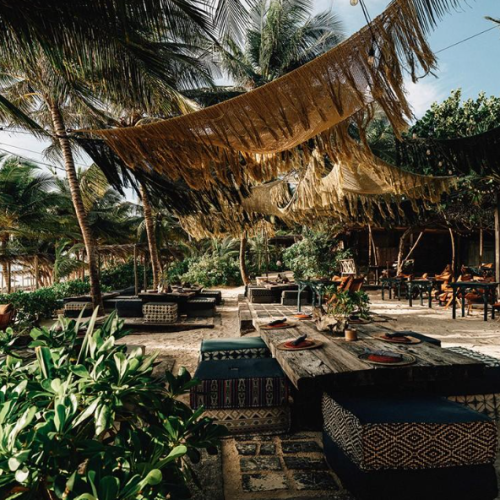
Attached to or associated with a jungle hotel, limited capacity, curated aesthetic, no DJ sets above ambient level, exceptional food program. The beach club as high-design hospitality experience rather than dayclub. Examples: Ahau Tulum, Be Tulum Beach. Best for: couples, design-conscious travellers, anyone who finds the festival venues exhausting. The most expensive tier per person due to limited capacity and higher service standards.
The Restaurant-First Venue
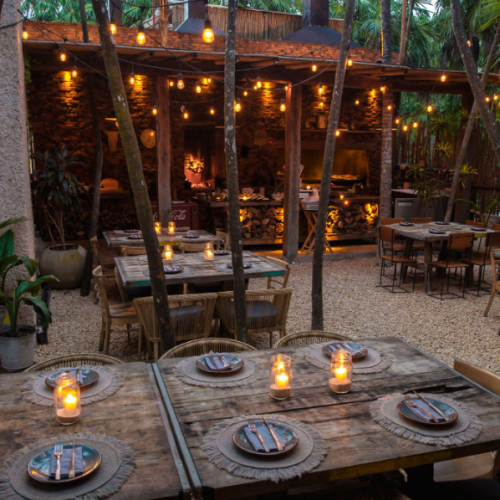
Beach access is secondary to a serious food and cocktail program — the kitchen is the reason people come and the beach is the setting rather than the product. Table service, a real wine list, and F&B that competes with the best restaurants in Tulum town. Examples: Rosa Negra Tulum, Arca (beach access), Hartwood. Best for: food-focused travellers, couples celebrating something, anyone who wants a genuinely excellent meal in an extraordinary setting.
The Sunset Destination
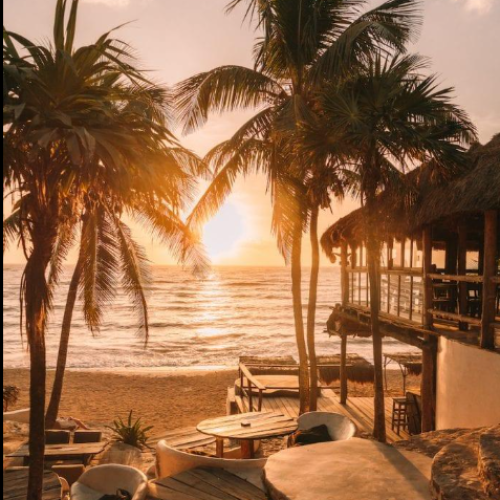
Built around a specific time of day — the music, the service pace, and the crowd all peak at sunset rather than midday. Often less crowded during the day and significantly more atmospheric in the late afternoon. Examples: Vagalume, Gitano Beach. Best for: travellers who want the Tulum experience without committing to a full day, guests who prefer arriving at 4pm and leaving by 8pm, anyone who has learned that Tulum sunsets from the beach are categorically better than Tulum beaches at 2pm.
The Low-Key Palapa
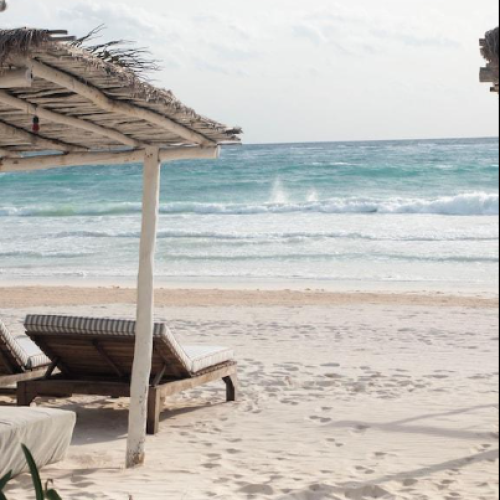
A handful of simpler, smaller operations on the beach road still operate on a more casual model — cold beer, decent ceviche, plastic chairs on the sand, and a minimum spend closer to $30 USD per person. They photograph less impressively than the premium venues and they are genuinely enjoyable in a way that does not require a budget conversation before you sit down. Ask locally — these are not heavily marketed and are usually found by walking the road rather than booking online.
The Free Alternative
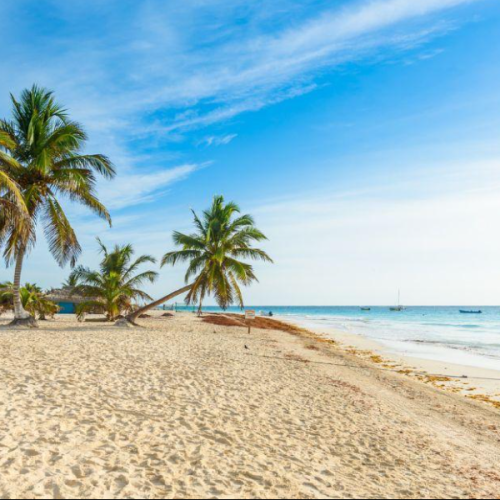
The beach below the Tulum ruins is a federal public beach — accessible for the cost of the ruins entry fee (~$5 USD) or free from the public beach access point north of the ruins. No sunbeds, no service, no music. Genuinely extraordinary setting. Requires carrying your own everything. The ruins loom over the cliff above you. The water is the same colour as the beach clubs. This is the version of Tulum that existed before the beach road was developed and the one that most closely matches the 2015-era Instagram posts that made Tulum famous.
The Best Tulum Beach Clubs — Honest, Current Reviews
Six of the most talked-about venues on the beach road — what they are actually like, what they cost, and who they are right for. No sponsored content. No affiliate relationships. Just an honest read.
🌴 Papaya Playa Project — The Most Famous One
WHAT IT IS: The beach club that defined the Tulum aesthetic for a decade — a sprawling, multi-venue beachfront property with a full-moon party tradition, weekend DJ programs, a hotel, and enough Instagram appearances to fill a hard drive. The most recognisable name on the Tulum beach road internationally.
WHAT IT IS ACTUALLY LIKE: Large, loud on weekends, professionally run, and genuinely beautiful in the early morning before the music starts and the crowd fills in. The setting — long stretch of beach, palapa architecture, jungle backdrop — is as good as any on the road. The music volume after noon on a Saturday makes conversation at a daybed very difficult.
THE HONEST FOOD REVIEW: Good but not exceptional — the kitchen delivers solid beach club food (ceviche, tacos, grilled fish) at prices consistent with the tier. Not a destination for serious food; a destination for a serious setting.
MINIMUM SPEND: $80–120 USD per person depending on daybed category and day of week. Weekend rates are higher.
BEST FOR: Groups who want the full Tulum beach road experience, first-timers who want to see the iconic venue, anyone who wants electronic music as part of the day.
NOT FOR: Couples wanting conversation, travellers sensitive to crowd density, anyone expecting the quiet version from 2016-era posts.
PRACTICAL TIP: Book a Tuesday or Wednesday visit — the experience is significantly better on a weekday. The beach is the same; the crowd is 40% of Saturday. The music is still there but the pace is more relaxed.
🍹 Vagalume — The Sunset Specialist
WHAT IT IS: A beach club built specifically around the Tulum sunset experience — the layout, the music programming, and the service rhythm all peak between 5pm and 8pm, making this the most efficient venue on the road for travellers who do not want to commit to a full 8-hour day.
WHAT IT IS ACTUALLY LIKE: Significantly more manageable than the full-day venues during the day — arrive at 4pm when the crowd is still reasonable, find a good spot, and experience one of the most genuinely beautiful sunsets in Mexico with a cocktail in hand. The beach faces west in a section of the road that catches the full sunset. The music transitions from ambient afternoon to more active at around 6pm — perfectly timed for the natural energy peak of the day.
THE HONEST FOOD REVIEW: Good cocktail program, adequate food — this is not the destination for a serious meal but the drinks are well-made and the light snack menu is sufficient for a late afternoon visit.
MINIMUM SPEND: $60–100 USD per person for afternoon access. Lower than full-day daybed venues because the time window is shorter.
BEST FOR: Travellers who want the Tulum beach road experience in a 3–4 hour window, couples who prefer atmosphere over all-day commitment, anyone who has done a full beach club day and wants a more targeted return visit focused purely on sunset.
NOT FOR: Morning and midday beach time, full-day relaxation, families with children.
PRACTICAL TIP: Arrive at 4pm, not 6pm. The 6pm arrival means fighting for position once the best spots are taken. A 4pm arrival with a 2-drink head start delivers a significantly better sunset experience.
🎶 Gitano Beach — The Cocktail Bar on the Sand
WHAT IT IS: Gitano started as a mezcal bar and jungle restaurant in Tulum town and expanded to a beach road venue that carries the same cocktail-first identity to the sand. Less about the daybed-and-sunscreen experience and more about excellent agave spirits, good music at a human volume, and a crowd that skews toward people who know their mezcal list.
WHAT IT IS ACTUALLY LIKE: The most bar-like of the beach club options — the vibe is closer to an excellent outdoor bar that happens to face the Caribbean than to a traditional beach club operation. The music is curated, present, but does not dominate the experience. The mezcal and cocktail program is the best on the beach road. The setting is beautiful.
THE HONEST FOOD REVIEW: Strong — the kitchen reflects the quality of the Gitano brand’s other operations. The food is good enough that you would order it in a restaurant without the beach incentive.
MINIMUM SPEND: $70–120 USD per person.
BEST FOR: Mezcal enthusiasts, cocktail-focused travellers, anyone who wants the beach road setting without the full festival venue energy. The crossover audience between the Mezcal guide above and this post — if you read both, Gitano Beach is your venue.
NOT FOR: All-day sunbathing, families, travellers who want the high-energy social experience of the larger venues.
PRACTICAL TIP: Order the mezcal tasting flight rather than individual cocktails at the start — it calibrates your palate for the rest of the afternoon and gives you a better sense of the list before committing to a full pour.
🕯️ Ahau Tulum — The Boutique Benchmark
WHAT IT IS: A boutique hotel and beach club that represents the most considered end of the Tulum hospitality spectrum — low capacity, high design, and a food and wellness program that takes the resort concept seriously rather than using it as a backdrop for a photo opportunity.
WHAT IT IS ACTUALLY LIKE: Genuinely quiet by Tulum standards — the music is ambient and kept at a conversational level. The palapa architecture is exceptional. The beach access is exclusive to a small number of daybed bookings and hotel guests, which means it actually feels like the uncrowded beach in the photos. The catch: it is among the most expensive venues on the road.
THE HONEST FOOD REVIEW: Excellent — one of the strongest food programs on the beach road. The kitchen uses fresh, locally sourced ingredients and produces food that a serious restaurant would be proud of. Not cheap, but the quality justifies the price.
MINIMUM SPEND: $150–250 USD per person. Some daybed categories require advance payment rather than minimum spend.
BEST FOR: Couples, wellness-focused travellers, anyone who has been to Papaya Playa Project and wants the opposite experience. The most Instagram-accurate venue on the road — what you book actually looks like the photos.
NOT FOR: Budget travellers, large groups, anyone wanting a high-energy social atmosphere.
PRACTICAL TIP: Book directly with Ahau — third-party booking platforms often show lower prices but with less favourable terms on the minimum spend. The hotel’s own website typically offers the most accurate current pricing.
🌹 Rosa Negra Tulum — The Restaurant That Also Has a Beach
WHAT IT IS: The Tulum outpost of the Rosa Negra group — a serious restaurant operation with Latin American cuisine, a strong cocktail and mezcal program, and beach access that functions as the setting for a genuinely excellent meal rather than as the primary product.
WHAT IT IS ACTUALLY LIKE: The food quality here is categorically above the standard beach club level — the kitchen produces cooking that belongs in a conversation about the best restaurants in Tulum, not just the best beach clubs. The beach itself is beautiful but the layout prioritises the dining experience over the sunbathing experience. Service is polished and attentive in a way that reflects a restaurant operation rather than a beach concession.
THE HONEST FOOD REVIEW: The best food on the Tulum beach road by a significant margin. The ceviche, the grilled proteins, and the cocktail program are all excellent. Worth visiting specifically for lunch even if the beach club format is not your preference.
MINIMUM SPEND: $80–150 USD per person — but this is easier to reach here than elsewhere because the food quality gives you actual reasons to order rather than ordering to meet a minimum.
BEST FOR: Food-focused travellers, couples celebrating a specific occasion, anyone who wants a beach club experience anchored by a serious meal rather than a serious DJ.
NOT FOR: All-day lounging, travellers who eat lightly, anyone primarily there for the music program.
PRACTICAL TIP: Book a lunch reservation rather than a daybed — the lunch format often provides better value and access. Arrive at 1pm, not noon — the kitchen is at its best in the early afternoon and the crowd has settled from the morning rush.
🏛️ The Tulum Ruins Beach — The Free Version That Almost Nobody Takes
WHAT IT IS: The federal public beach below and adjacent to the Tulum archaeological zone — accessible for the cost of ruins entry (~$5 USD) or free via the public beach access path north of the ruins parking area. No service, no sunbeds, no music. The ruins visible on the cliff above. The water identical in colour to the paid beach clubs 2 kilometres south.
WHAT IT IS ACTUALLY LIKE: Crowded midday with ruins day-trippers but genuinely manageable before 10am and after 4pm. The setting is one of the most historically dramatic beach locations in Mexico — Mayan ruins on a cliff directly above the Caribbean. The water is pristine. You carry your own drinks, your own towel, your own everything. There is nowhere to sit except the sand.
THE HONEST ASSESSMENT: This is the version of Tulum that appears in the earliest travel writing about the destination — before the beach road was developed, before the minimum spends existed, before the DJ booths were installed. For travellers who came to Tulum for the ruins and the water rather than the hospitality product, this beach delivers everything that matters and nothing that doesn’t.
COST: Ruins entry ~$5 USD. Everything else: whatever you bring.
BEST FOR: Budget travellers, history-focused visitors, anyone who finds the beach club model frustrating, travellers with children who want beach time without minimum spend pressure, the version of yourself that wants to see what this place actually is without the product layer on top of it.
NOT FOR: People who want service, shade structures, or somewhere to put a drink down.
PRACTICAL TIP: Arrive at 8am when the ruins open. You will have 90 minutes of near-empty beach with the most dramatic setting on the Riviera Maya before the first tour buses arrive. This is, objectively, one of the best free experiences in Mexico.
What the Photos Show and What They Don't
The gap between the Tulum beach road as photographed and the Tulum beach road as experienced is not dishonesty — it is the nature of how a visual platform selects for maximum beauty and minimum context. Here is what gets left outside the frame.
WHAT THE PHOTOS SHOW
Empty daybeds with crisp white cushions facing undisturbed turquoise water — shot at 6am before opening
A single human figure, perfectly lit, appearing to be the only person on the beach
A tostada or a cocktail arriving at a table with no other evidence of consumption or cost in the frame
Jungle-backed palapa architecture with no other buildings or infrastructure visible
Sunset light turning the water from turquoise to rose gold, with no one visible except the photographer’s subject
A smiling couple or individual appearing to have discovered a quiet, exclusive beach that no one else has found
A price tag: not present
The music: not present
The road getting there: not present (it is an unsealed track through the jungle, shared with tour buses, golf carts, and bicycles, with no footpath)
The checkout process: not present
The minimum spend conversation at the gate: not present
WHAT THE PHOTOS DON'T SHOW
The 200 to 600 other guests at the venue with you — present in all the same spaces, also there for the photo
The volume of the music system after noon — beach clubs on the Tulum road run professional-grade sound systems. Conversation at a daybed after 1pm on a busy day requires raised voices or proximity.
The road to get there — the Tulum beach road is unpaved in significant sections, narrow, and shared with an increasing volume of vehicles. The 10-minute Uber from town becomes a 25-minute experience in peak hours. The road itself is scenic and interesting, but it is not the smooth approach a luxury hotel driveway implies.
The minimum spend reality at the gate — most first-time visitors do not fully understand the consumption minimum model until they are at the venue. It is not hidden, but it is also not prominently featured in the social content that drove the visit.
The service pace — a beach club with 400 guests and a table of 10 needing drinks takes time. The unhurried, attentive service implied by the photos is realistic for a boutique venue at low capacity. It is not consistently realistic at a full-scale venue on a busy Saturday.
The 2pm crowd reality — at the best photo spots (the most dramatic palapa structures, the cleanest sections of sand), there are people. Many people. All with the same content goal. The empty frame is either achieved very early, negotiated with the club, or achieved through skilled cropping.
What this means practically: the beach is still beautiful. The water is still that colour. The experience is worth having with adjusted expectations. The photos are not lies — they are a curated selection of real moments that happened to exclude context. Knowing the context makes the experience better, not worse.
How to Do a Tulum Beach Club Day — Six Things That Actually Matter
The gap between a frustrating and an excellent beach club day in Tulum is almost entirely determined by decisions made before you arrive. Here are the six that matter.
Book in Advance — Always
Walk-in access to the best venues in peak season is either unavailable or priced significantly higher than pre-booked rates. Reserve 3–7 days ahead in shoulder season, 2–3 weeks ahead in December–April. Book directly with the venue where possible — the best daybed positions and rates are rarely available through third-party platforms. Confirm your reservation 24 hours before arrival.
Arrive at 9am — Not 11am
The two-hour window between 9am and 11am is when Tulum beach clubs are at their best: the sand is raked, the daybeds are clean, the water is glassy, and the crowd is thin. The music is quieter. The service is faster. The photos are easier. Every hour after 11am adds volume, crowd density, and service pressure. The travellers who leave saying the experience exceeded expectations almost universally arrived early.
Eat Breakfast Before You Go
A full breakfast in Tulum town ($6–10 USD at a local café) before going to the beach road means your food ordering at the venue is driven by appetite and desire rather than hunger and minimum spend pressure. This single decision improves both your experience and your bill. The beach club food is good — order it because you want it, not because you need it.
Choose Your Venue for What You Actually Want
Festival energy → Papaya Playa Project or Mia. Quiet and design-forward → Ahau. Best food → Rosa Negra. Best cocktails → Gitano. Sunset experience → Vagalume. Free with remarkable setting → Ruins beach. The mistake most first-timers make is choosing the most famous name rather than the experience that fits them. The most famous venue is not always the best venue for you.
Understand the Minimum Spend Before You Sit Down
At the entrance or on booking, confirm the exact minimum spend per person, whether it includes or excludes tax and service, which items count toward it, and what happens if you do not meet it. This is not suspicious behaviour — it is basic consumer clarity. Every legitimate venue will answer these questions directly. A venue that is vague about the minimum spend structure is a venue worth being cautious about.
Leave Before the Peak and Return for Sunset
The optimal Tulum beach club day looks like this: arrive at 9am, enjoy the morning (the best part), have lunch, leave between 2–3pm when the crowd and volume are at their peak, rest in town during the hottest part of the day, return to a different venue for sunset at 4–5pm. Two beach club experiences in one day, each at its best, for a combined cost that may be less than a single full-day premium daybed reservation.
Who Tulum Beach Clubs Are Actually Right For
An honest assessment of who gets the most from a Tulum beach club day — and who might be better served by a different experience entirely.
Couples on a Special Trip
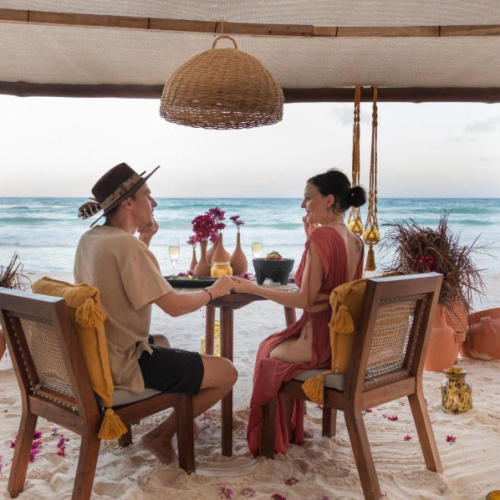
A well-chosen beach club day — particularly at a boutique venue like Ahau or a sunset-focused experience at Vagalume — delivers one of the most visually beautiful and romantically atmospheric experiences on the Riviera Maya. Budget accordingly, arrive early, choose the right venue, and the day exceeds expectations significantly.
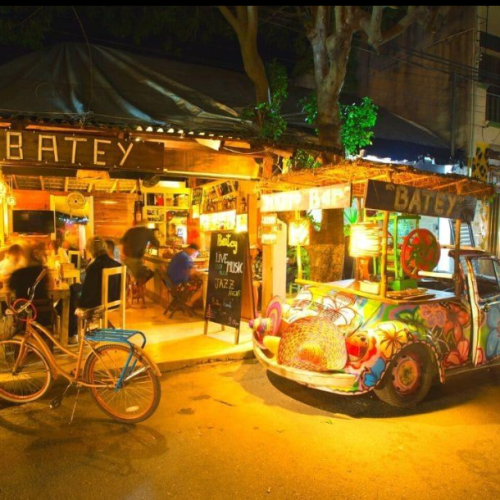
Batey — Tulum Beach Road
The festival-format venues (Papaya Playa Project, Mia) are genuinely excellent for groups of 4–8 who want music, social atmosphere, and a high-energy beach environment. The economics also improve with groups — shared food orders and the social benefit of the crowd are features rather than bugs at this venue type.

Solo Travellers on Weekdays
A solo visit to a mid-tier venue on a Tuesday or Wednesday — with a good book, a single decent lunch, and the morning to enjoy the water — is one of the most underrated Tulum experiences. The minimum spend is manageable solo, the social energy at lower crowd levels is welcoming rather than overwhelming, and the beach itself is as good on a Tuesday as it is on a Saturday.
Families with Children
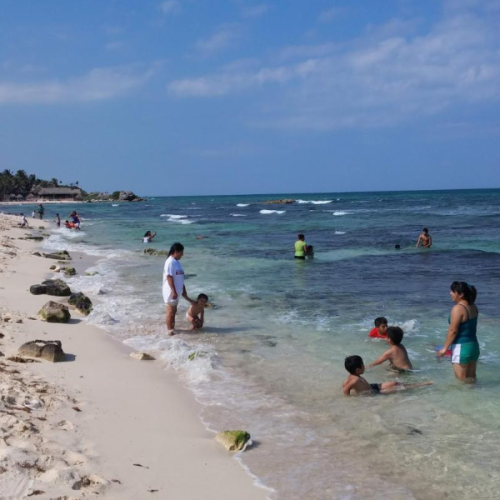
Possible at the right venue but requires research. Not all beach clubs welcome or cater for children — the festival venues are adult environments and the minimum spend model is economically punishing for a family of four. The ruins beach (free) and the northern public beach access points are better family options. If a beach club is the goal, choose a boutique hotel venue with family-friendly policies and confirm in advance.
Budget Travellers
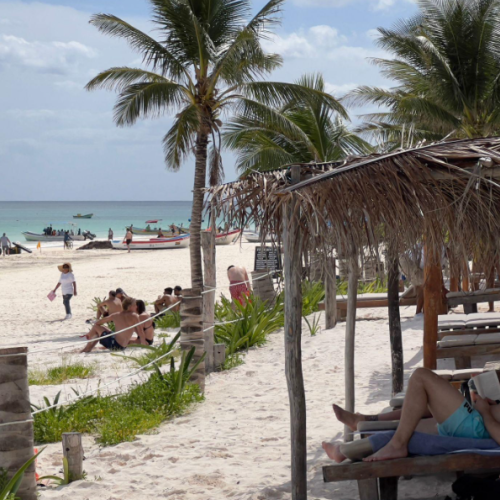
The math does not work below approximately $60–80 USD per person per day minimum. Below this, the experience is constrained by minimum spend anxiety rather than enjoyment. Budget travellers are better served by the ruins beach (free), the Puerto Morelos reef ($25 for a snorkel tour), or any of the public beaches between Playa del Carmen and Tulum that offer the same water quality with no entry cost.
Travellers Who Want Quiet and Nature
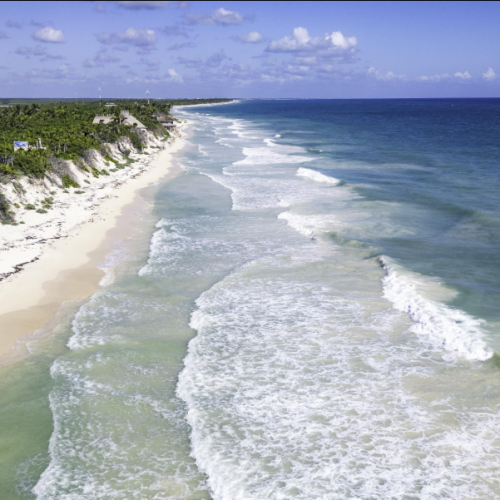
If the purpose of the beach is peace, natural environment, and escape from urban noise — Tulum beach clubs are the wrong destination. The same budget that funds a single Tulum beach club day funds three nights in Bacalar on the Lake of Seven Colors, or a cenote-focused road trip through the Yucatán interior, or a week in Mahahual diving the Mesoamerican reef. The Caribbean is beautiful everywhere on this coast. The Tulum beach road is a specific and distinct product — valuable when it matches what you came for, significantly less so when it doesn't.
Want the Riviera Maya Without the Minimum Spend?
From Bacalar’s Lake of Seven Colors to Mahahual’s reef — our destination guides cover every corner of Mexico’s Caribbean coast, at every budget level.
Tulum Beach Clubs — Common Questions
How much does a day at a Tulum beach club cost?
The honest range is $60–400 USD per person for a full day, depending on the venue tier and how much you consume. Entry-level venues with the lowest minimum spend run $50–80 USD per person if you eat and drink at a moderate pace. Mid-tier venues average $100–180 USD per person for a full day including food and drinks. Premium boutique venues (Ahau, Rosa Negra prime positions) run $150–300+ per person. A realistic average for two people at a mid-tier venue for a full day — including food, drinks, tips, and transport — is $350–500 USD. This is the number most people are not shown before they book.
What is the best beach club in Tulum?
It depends entirely on what you want from the day. For the best food: Rosa Negra. For the most iconic setting with manageable crowd: Ahau. For the full festival experience: Papaya Playa Project. For the best cocktails: Gitano Beach. For a sunset-focused short visit: Vagalume. For free access with a remarkable setting: the ruins beach. There is no single best beach club in Tulum because the venues serve genuinely different purposes — choosing the right one for your specific travel style is the most important decision in this guide.
What should I do in Tulum instead of a beach club?
The Tulum ruins at opening time (8am) before the tour groups arrive — one of the most dramatically sited archaeological sites in Mexico. A cenote day trip — Gran Cenote and Dos Ojos are both within 20 minutes of town. A bicycle ride through the Sian Ka'an biosphere reserve. A meal at one of the serious Tulum town restaurants (Arca, Hartwood, El Carbón) that competes with the best restaurants in Mexico. A day trip to Bacalar, 2.5 hours south by ADO bus, for the Lake of Seven Colors at a fraction of the Tulum beach club cost. The ruins beach (free). All of these are excellent and several are genuinely better than the beach club experience for travellers who do not fit the beach club profile.
Do you have to pay to access the beach in Tulum?
The beach itself — the strip of sand below the high tide line — is legally public under Mexican federal law. However, the beach clubs control access to the area above the high tide line (the daybeds, the palapas, the shade structures, the service) through their private concession permits. In practice, walking the full length of the beach road and accessing the water is possible without paying — but accessing any of the infrastructure that makes it the experience most visitors came for requires paying. The free alternative is the public beach below the Tulum ruins, accessible via the ruins entry fee (~$5 USD) or the public access path north of the ruins parking area.
Is Tulum worth visiting in 2026?
Yes, with adjusted expectations. The Tulum that made international travel lists between 2015 and 2020 — quieter, cheaper, less developed — no longer exists in that form. The Tulum that exists in 2026 is a significantly more developed, more expensive, and more crowded destination that still has the ruins, the cenotes, the jungle, and the water that made it famous. The beach clubs are more expensive and more crowded than they were. The cenotes are better protected and more strictly managed than they were. The restaurant scene is genuinely excellent. The overall destination still delivers more than most places on the Riviera Maya — it just does so at a higher price point and with more management than the mythology suggests.
When is the best time to visit Tulum?
November to April is the dry season — best weather, clearest water, lowest humidity. December and January bring the highest prices and largest crowds, including the holiday period (December 20 – January 5) which is peak of peak season at all venues. February and March are excellent — good weather, high season energy without the December chaos. April to May is the sweet spot for value: dry season weather, shoulder season prices, and crowds that have dropped noticeably from the January peak. Avoid September and October for weather risk — hurricane season peak. The beach clubs are open year-round but the experience in summer (June–August) includes higher heat, occasional afternoon rain, and the Sargassum seaweed accumulation that affects some beach sections in certain years.
Keep Exploring
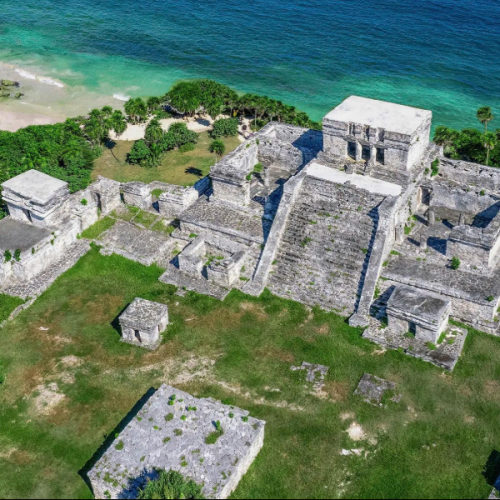
Tulum Complete Destination Guide
The ruins, the cenotes, the beach road, the restaurant scene, and the honest difference between the Tulum that Instagram shows and the one that actually exists. Everything you need to plan the right Tulum trip.
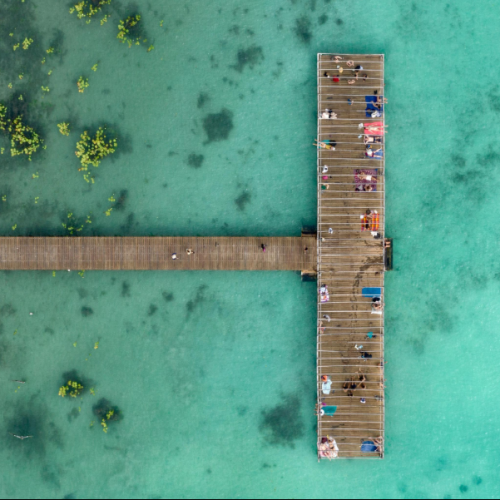
Bacalar — The Lake of Seven Colors
42 kilometres of freshwater lagoon, boutique lakefront hotels, cenote swimming, and a pace of life that converts everyone who visits. The Riviera Maya destination that does not appear in the beach club photos — and is often better.
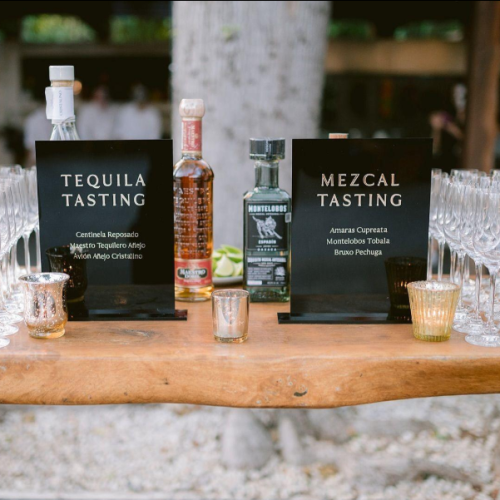
Mezcal vs Tequila — A Beginner's Guide
One of them is the most famous Mexican spirit in the world. The other is older, more complex, and nothing like what most people expect. Everything you need to know before you sit down at a Tulum mezcalería.
Get the Riviera Maya in Your Inbox
Weekly travel guides, property insights, and insider tips from Mexico’s Caribbean coast — delivered every week. No spam. Unsubscribe anytime.